

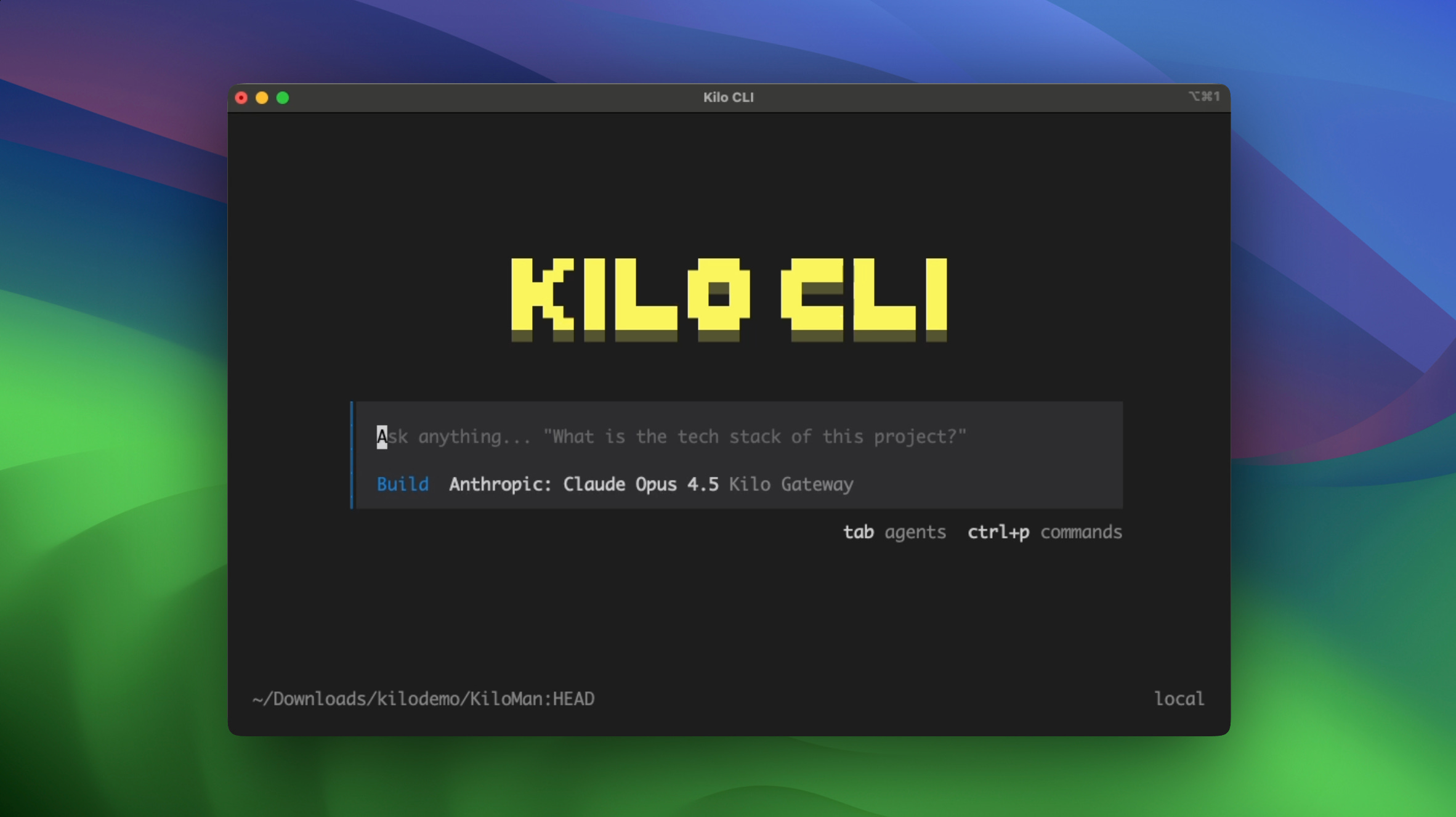
We’ve spent the last year building the best VS Code extension for agentic engineering. A million downloads later, we’ve learned how important an end-to-end experience is. Developers don’t live in one tool. They move between IDEs, terminals, phones, and remote servers. The best tools go with them. Kilo CLI 1.0 is built for this world.
If 2025 was the year that senior engineers stopped rolling their eyes at AI coding, 2026 is the year teams embrace agentic engineering across their entire workflow, whether that’s in VS Code, JetBrains, or a terminal session at 2am debugging a production issue. As that shift happens, the tools behind agentic workflows need to work in the same environments engineers already rely on, rather than forcing them into a single interface or model provider. That reality is what motivated this release.
To meet that reality, we made a deliberate decision to rebuild the Kilo CLI, integrating it deeply with Kilo’s model-agnostic platform and anchoring it in an MIT-licensed software open-source foundation.
Kilo CLI 1.0 is a HUGE jump forward, and it’s designed to become a core part of how agentic engineers work day-to-day. Once you try it, you’ll see why.
Why This Matters
Most AI coding tools today are built around narrow assumptions: a single editor, a single model provider, or a closed stack that works best inside one product ecosystem. That approach breaks down in real-world engineering, where developers constantly move between interfaces.
The terminal remains the most universal environment in software development. It’s where engineers SSH into servers, diagnose failures, and operate when higher-level tools fall away. As agentic workflows become part of daily engineering work, they need to live in the terminal, not just inside an IDE.
Kilo CLI 1.0 brings together two things that have not existed before in a production-ready CLI:
A deeply capable, terminal-native agentic engineering experience
A fully model-agnostic platform
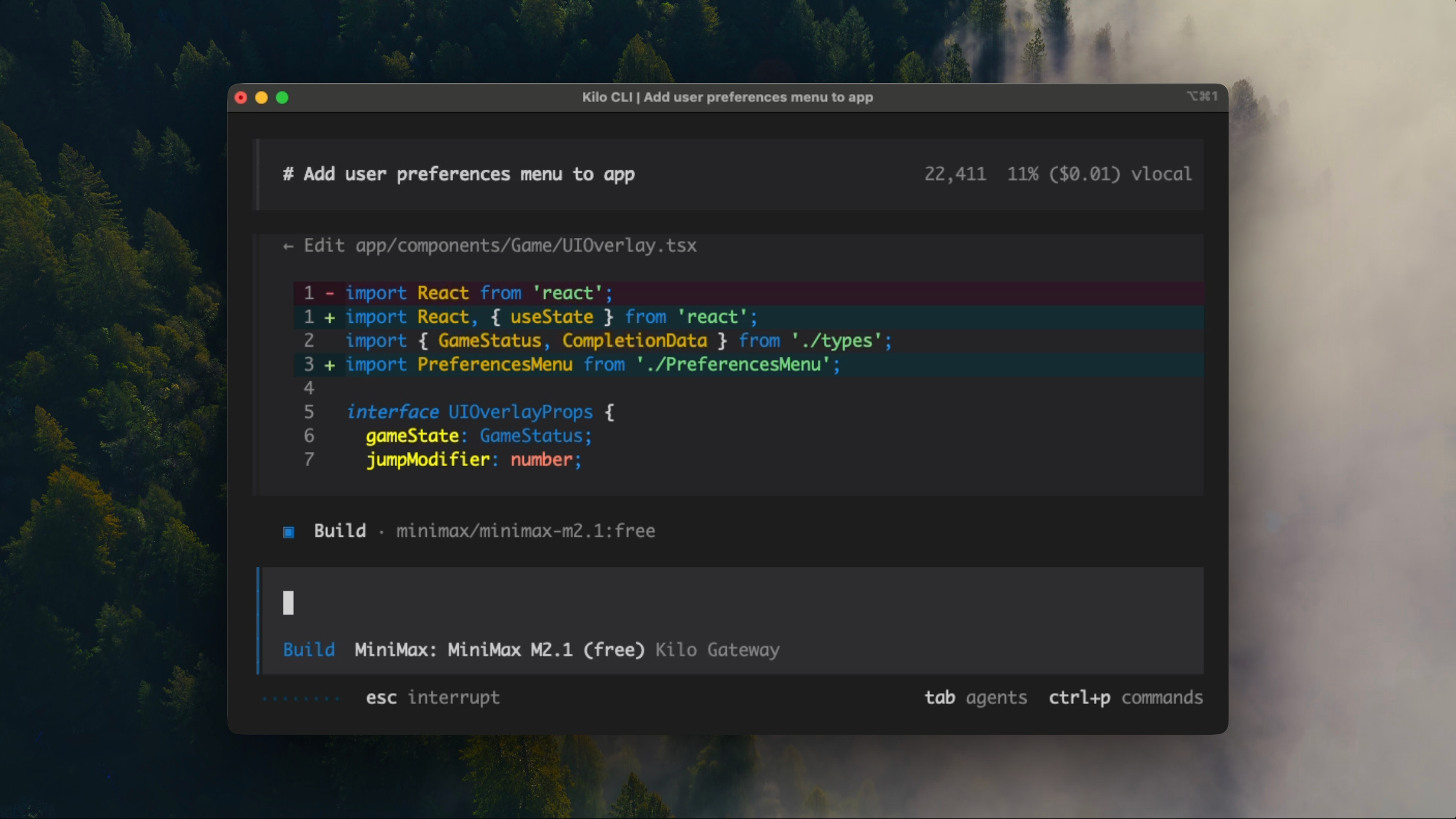
By rebuilding, Kilo gives developers access to 500+ models, allowing them to choose the right tradeoffs for cost, latency context, and reasoning on a per-task basis without locking them into a single vendor.
This combination is intentional. Many tools offer powerful CLIs or flexibility across models, but not both. Kilo is bringing those capabilities together in a way that reflects how engineers actually work.
This is also a contrarian bet. While much of the AI tooling market is consolidating into vertically integrated, closed systems, Kilo is betting that the future of agentic engineering will be open, modular, and portable. Building on an MIT-licensed open-source foundation and contributing back upstream reflects my co-founder Sid Sijbrandij’s long-held belief that software should be open by default. As AI becomes more central to how software is built, openness stops being a philosophy and starts shaping the actual tools developers depend on.
What This Means for You
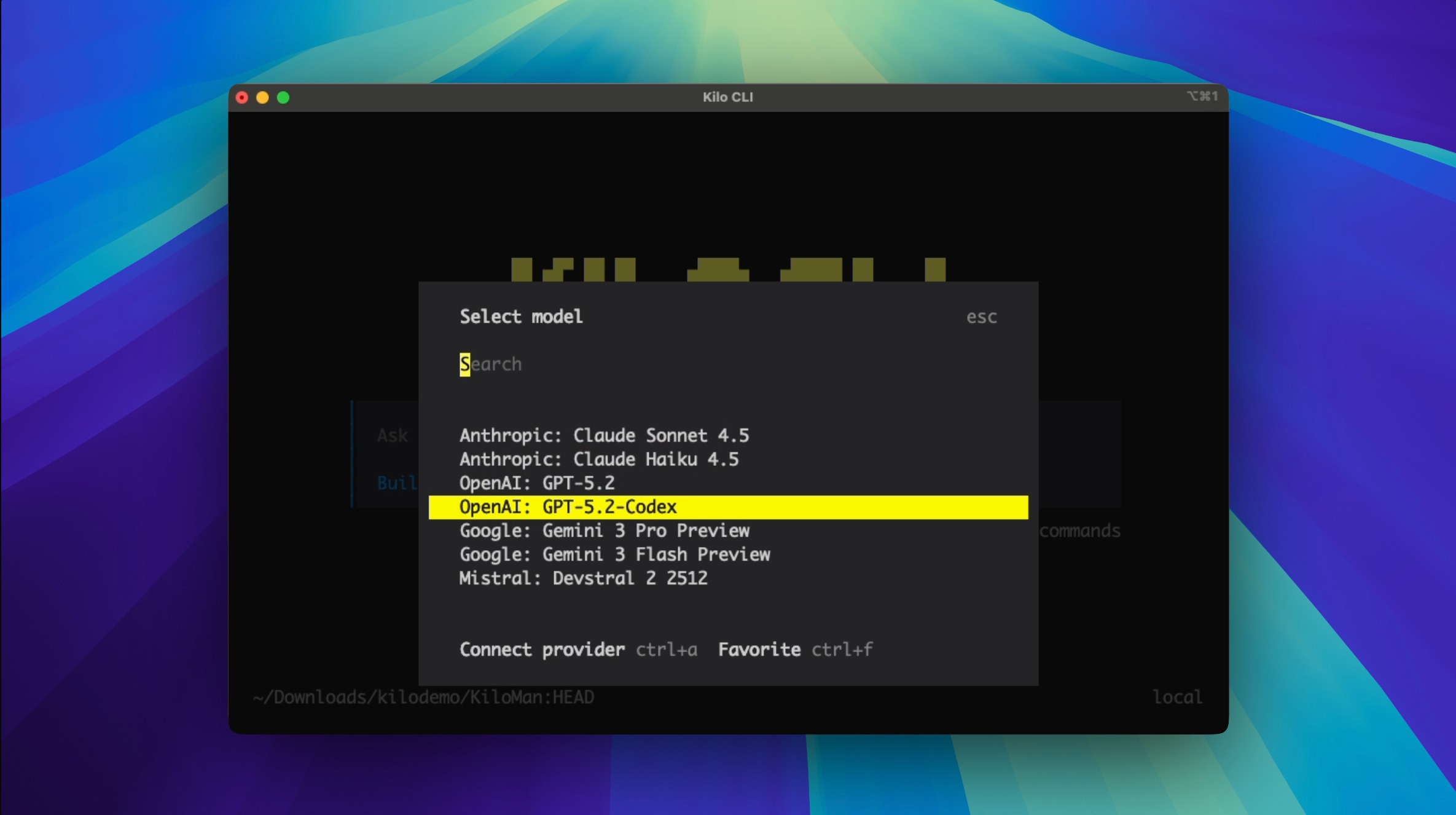
If you’ve been using Kilo through VS Code or JetBrains (or even our 0.x CLI), you now have a first-class terminal experience that shares the same philosophy: use any model, bring your own inference, and stay in control of your workflow.
Kilo CLI 1.0 is a step change worthy of its version number because it can:
Use the best model for the job. With 500+ models available, you can control the tradeoffs between latency, cost, context, and reasoning for each task. Kilo doesn’t lock you into a single provider.
To help developers get the most out of Kilo CLI 1.0, we’re offering MiniMax M2.1 completely free this week. With excellent function calling, tool choice and structured outputs, M2.1 has become a reliable model for everyday coding for Kilo Coders, and MiniMax also our launch partner for Kilo for Slack.
Open the black box. Kilo is open source, so you can inspect, customize, and integrate to meet your specific needs. No surprises, no hidden behavior.
Learn from the Best: OpenCode
Our original CLI was built on top of our VS Code extension architecture. Our original CLI had dependencies that slowed iteration. Terminal-native tools deserve terminal-native foundations.
We found that foundation in OpenCode—an open source CLI for agentic coding that’s MIT licensed, beautifully designed, and backed by an active community. It’s everything we wanted in a CLI foundation: fast, extensible, and built by people who understand what developers actually want in a TUI. So to get to v1.0 at Kilo Speed, we are basing it on OpenCode
Kilo CLI 1.0 is built on the OpenCode server as its open-source foundation. Instead of a thin wrapper around our extension capabilities, we’ve integrated Kilo CLI deeply into the Kilo platform while preserving everything that makes OpenCode great.
We’re thrilled to join the OpenCode community. Open source works because people give back, and we will be contributing our improvements and bug fixes upstream.
The Agentic Engineering Platform
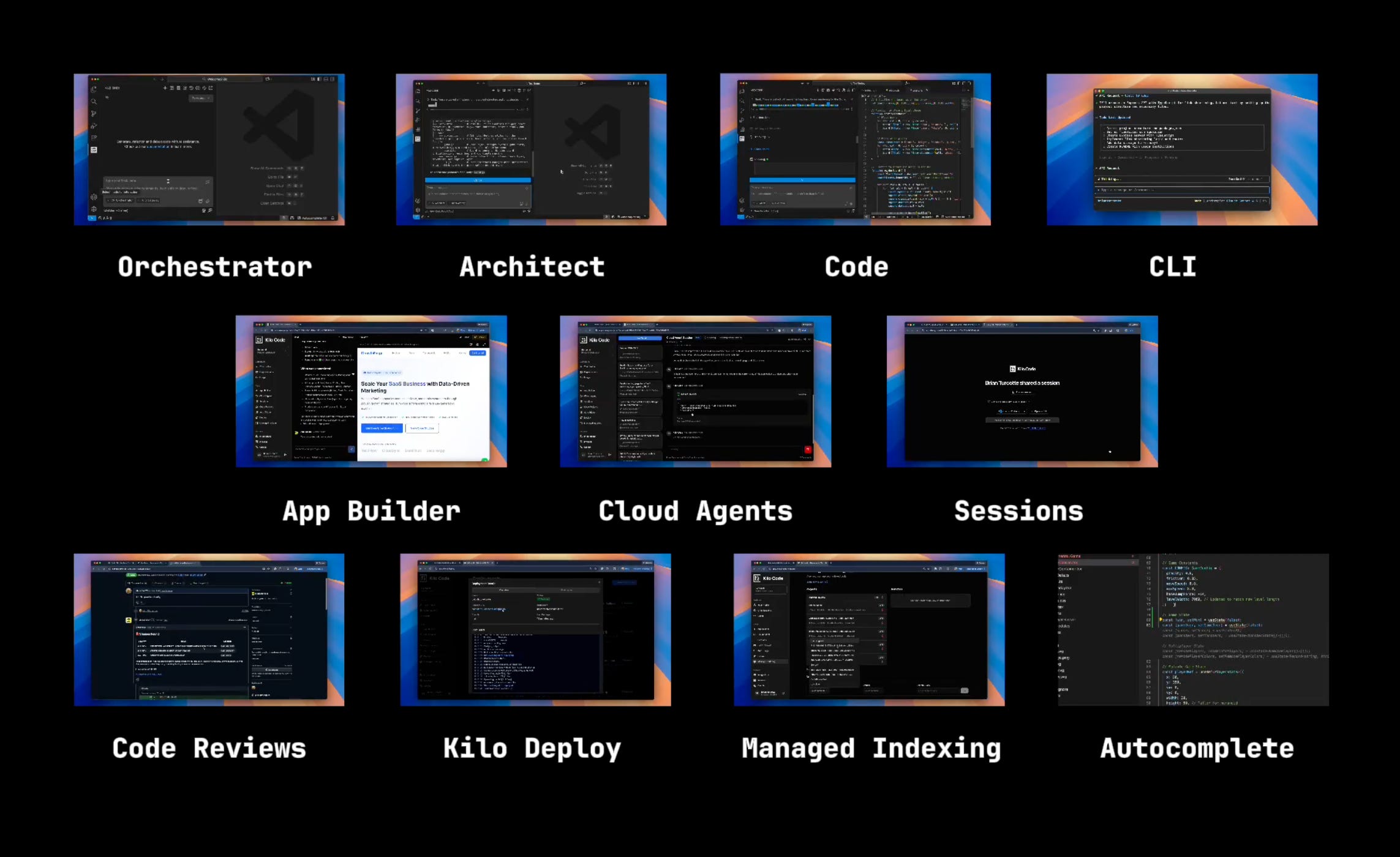
We’ve always believed that platforms beat niche solutions. A great VS Code extension is useful. A great CLI is useful. But an integrated platform lets you move seamlessly between them.
With Kilo, you can:
Start a coding session in the CLI while SSHed into a remote server
Check it out in VS Code when you’re back at your desk
Share it via Slack with a teammate
Get an AI code review before you ship
Deploy through Cloud Agents without leaving your flow
A unified experience across your entire development lifecycle—all powered by the best AI model for the job.
Get Started
Install Kilo CLI and experience the difference:
npm install -g @kilocode/cliThen just run kilo in your project directory. It’ll detect your repository and you can get started right away.
If you’re already using Kilo in VS Code or JetBrains, your settings and sessions sync automatically. That’s the whole point—you can always pick up where you left off, in any place.
What’s Next
Version 1.0 is stable and production-ready. Here’s what’s next:
Deeper integration with Cloud Agents for remote execution
Enhanced session sharing across all interfaces
Tighter orchestration between CLI and IDE workflows
We ship at Kilo Speed because we build Kilo with Kilo. Expect frequent updates.
Try it out. Tell us what you think. And if you’re part of the OpenCode community, we look forward to collaborating.
Move at Kilo Speed.
It's the era of AI, time to use CLI & TUI.
I used Kilo CLI, and it's great!
Thank you so much!!
Cool, we're moving in the right direction. With 500+ models to choose from, too much choice can be a problem too. I currently bounce around four CLIs (claude, codex, copilot, gemini) and manage skills through `npx skills`. This setup is a handful -- can Kilo CLI really be the ONE CLI to rule them all? I don't want to have to deal with installing/updating various skills/plugins and MCPs across multiple CLIs. Just give me one CLI that is intelligent enough to scan my codebase and automatically install the best skills & MCPs for that project, along with selecting the best models for each job & subtask. Holy Grail stuff.