

Aroma de Café
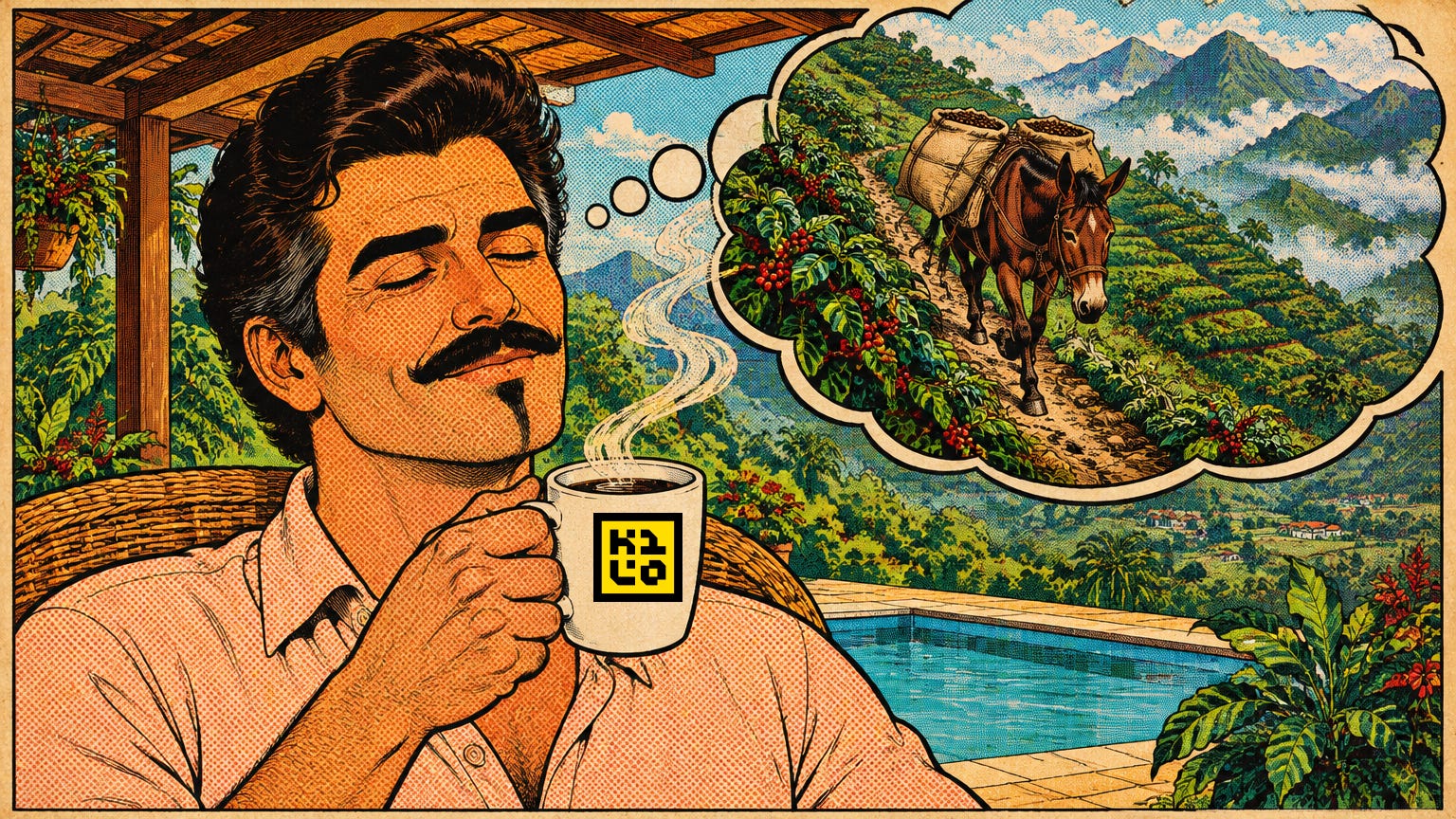
Conchita the mule doesn’t care much about branding. Her role is to carry the sacks of raw beans and not lose her footing on the steep slopes of the Andes mountains. Juan Valdez, the mustached man with the sombrero aguadeño, that’s the one everyone talks about. He’s a legend here and abroad. What does he sell? “The richest coffee in the world”. That, my friends, is what I call marketing.
I open my eyes after inhaling the rich steam of a cup of black coffee and their image fades slowly. The unmistakable aroma fills my head as if in a trance. I close them and see images of Conchita leaving a farm nestled up in the mountains, then the beans being roasted and finally the brewing machine I used this morning to prepare my first cup.
When la roya hit hard
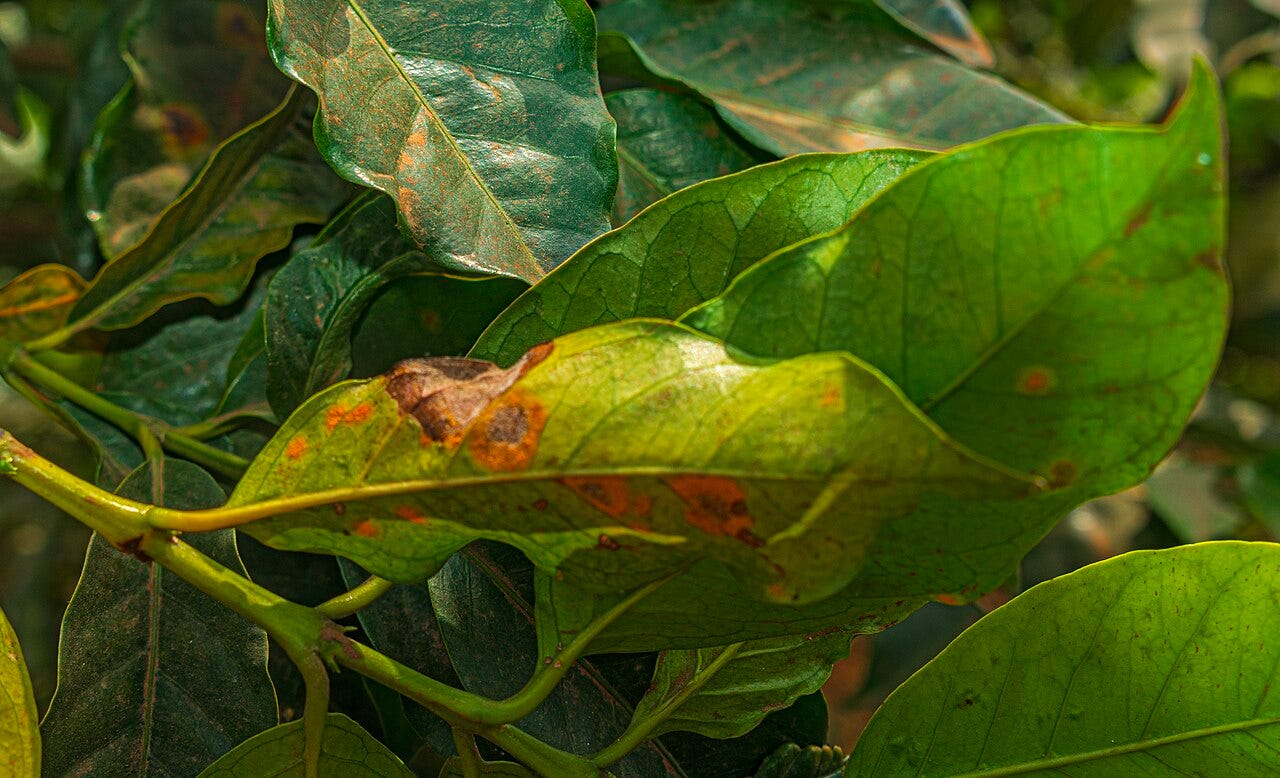
I pause and wonder which variety I might be drinking: Caturra or Castillo? I’d bet my nose it’s Castillo. Between 2008 and 2011, coffee leaf rust, a fungus we call la roya that has troubled Colombian farmers since it was first detected here in 1983, helped cut Colombia’s coffee production by about 31%. About 60% of Colombia’s coffee area was planted with varieties susceptible to la roya, such as Caturra. We recovered because Cenicafé, the coffee growers’ research center, had already released Castillo, a rust-resistant variety, in 2005. Castillo was more than a swap of one variety for another. Cenicafé built it from several genetic lines, each adding to its resistance. Diversity was part of the design. After la roya, more than 90% of the renewed area grew Castillo. For a few years, Conchita carried lighter sacks, until the replanted farms recovered.

Your AI stack needs more than one (coffee) variety
Depending on a single model is like farming a monoculture: efficient until a threat arrives. A developer team that runs on one model from one vendor is a “Caturra farm,” fine and dandy until a price change or a rate limit hits. Cursor users are finding that out this month, as I wrote in “Nobody Should Knock Your Stack Down.”
I’ve also learned this the hard way. Eager to try the latest Claude Fable 5.1, I burned through my credits for the entire week, and my work came to a halt until the next token cycle. Now I use Kilo Desktop, where I can switch models mid-task, assign lighter or even free models to routine work, and save my credits for the big jobs.
Heavy AI users already hedge that risk. For example, on OpenRouter, fewer than 4% of any major lab’s users rely on that lab alone, and customers spending $100 or more a month use a median of six model families, according to “The Model Mix Is Growing, and Moving In-House.” Kilo by Anaconda is built for that. You can choose from 500+ models, pick a different one for each agent, bring your own API keys, or run open models on your own hardware.
Same team, more than one model
On a farm with Castillo on one slope and Caturra on another, Conchita carries both down the same trail. What matters is that everyone knows what’s planted and where. Same goes for a dev team: one engineer runs a fast, cheap model for boilerplate, another a heavier one for the hard refactor, and a third runs an open model locally. Kilo for Teams lets you share the same custom agents and provider keys, all on one bill, with usage analytics to see where the tokens go. Kilo Enterprise adds model and provider access controls, budgets per sub-organization, and single sign-on (SSO).
Have your Castillo ready
Colombia’s coffee growers had Castillo ready before they needed it, and they planted it when la roya hit. Conchita never asks which variety is in the sacks. She just keeps her footing. A team with more than one model gets to do the same.
Don’t wait until your current model becomes a problem. My advice, strong like my coffee: Download Kilo Desktop, and this week, run the same real coding task with two different models. Compare the results, the cost, and the effort it took to switch. If you work on a team, make that flexibility part of how everyone builds with Kilo for Teams.
The finest cup of coffee takes years in the making: good beans, the right tools for roasting, and careful preparation. So does a resilient dev team.