

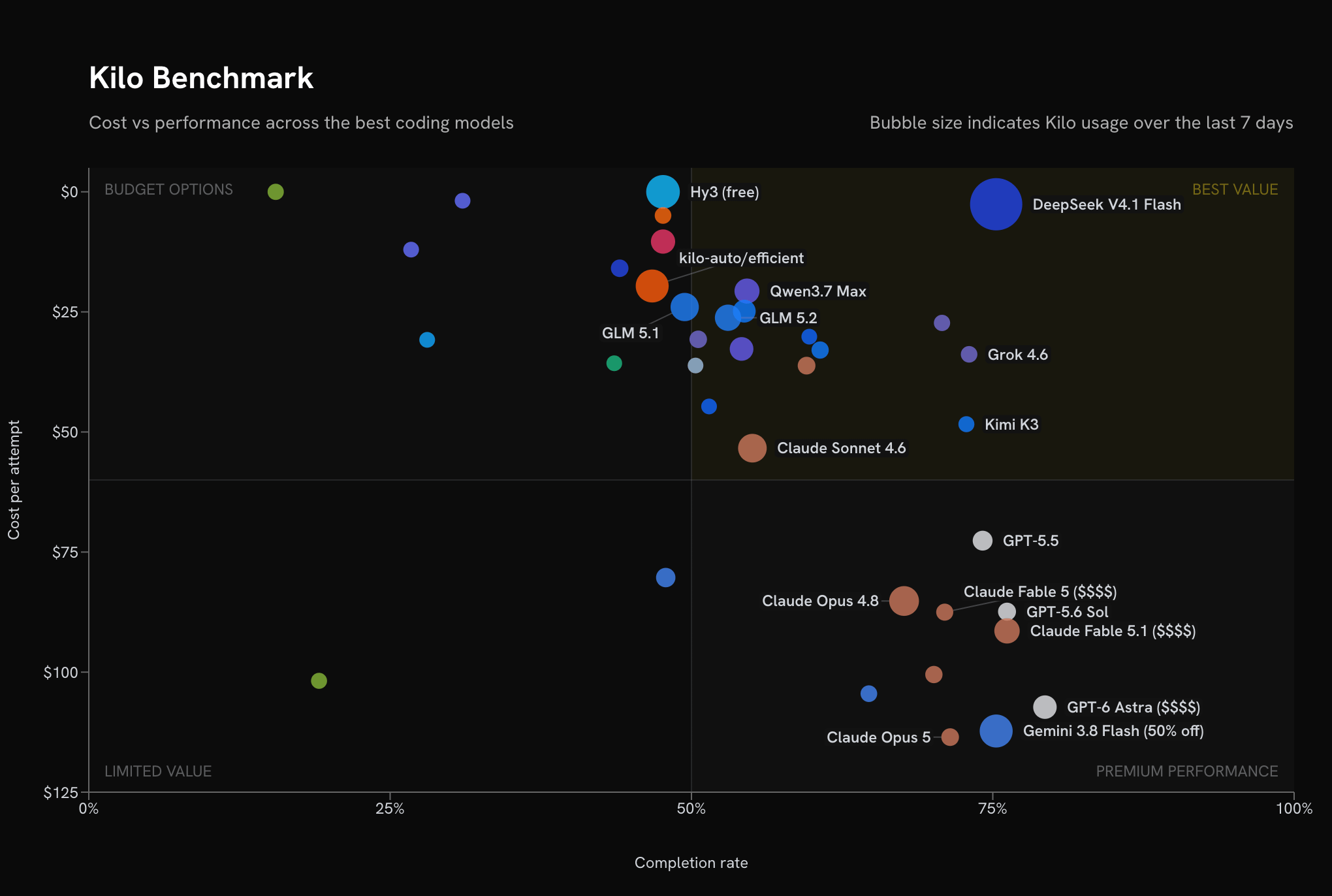
Developers are spreading their work across more models from more labs, and more of that work is running on models teams host themselves. Data published this week from OpenRouter, our own usage dashboard, and a talk by Revolut’s AI ops lead all point the same way. The single-model setup is fading, and the default model is increasingly one you can run on your own hardware.
Teams now run a portfolio of models

OpenRouter reported on November 2 that customers spending $100 or more a month now use a median of 6 model families, which is double the figure from a year ago. The top 10% of those customers went from 7 to 14. For a while, the trend ran the other way: the count fell through the first half of 2025 and bottomed at 3.8 in June, then climbed every quarter to 7.3 in October 2026; the highest OpenRouter has measured.
The heavier the usage, the wider the spread. In October, the median customer spending $100 to $1K a month used 5 labs, those spending $1K to $10K used 8, and those above $10K used 12. Among the $10K+ group, 90% used five or more labs.
Loyalty to a single lab has become rare. Fewer than 4% of any major lab’s users on OpenRouter use that lab alone, and even Anthropic, which OpenRouter calls the stickiest, accumulates only 39% of its customers’ spend. OpenRouter does point out the obvious selection bias, since people come to a router to use more than one model. What stands out is the reversal: after a period of consolidation, the number of labs per customer is rising again.
Inside Kilo, each agent role has its own favorite
Our model dashboard shows the same spread inside a single tool. The leading model changes with the job, and no model takes more than 30% of any role.
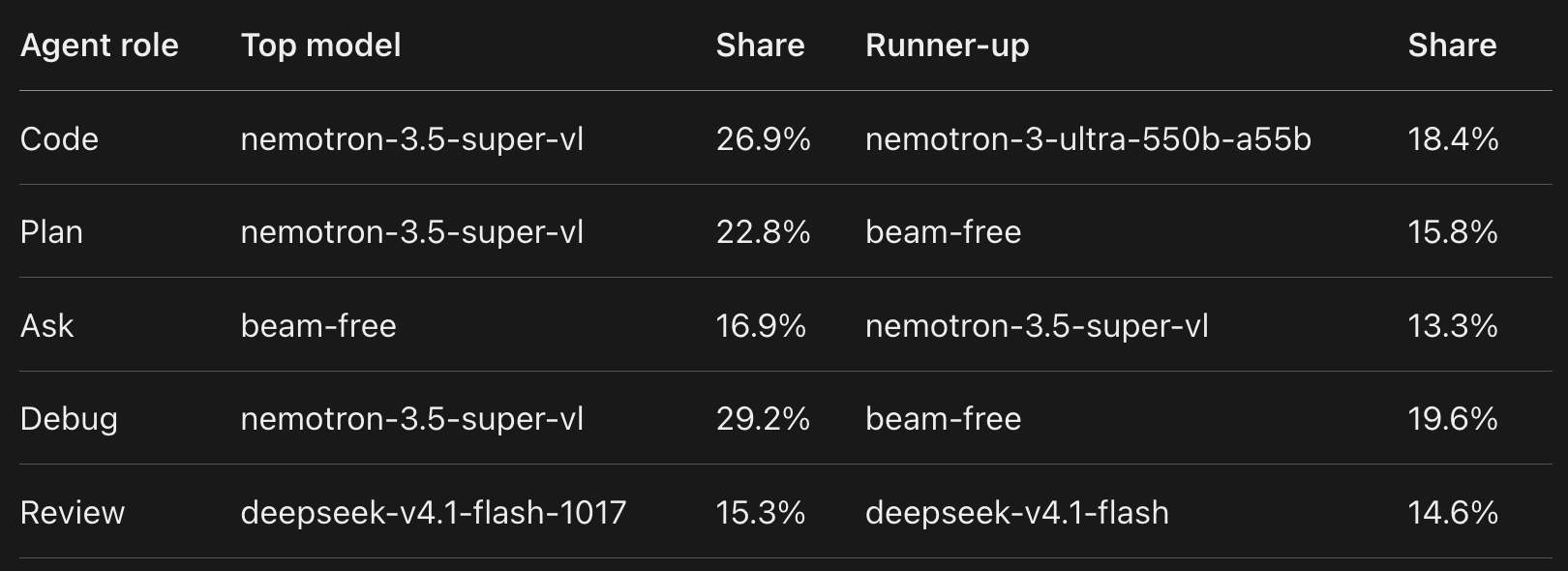
Nvidia’s Nemotron models lead code, plan and debug. Review is the odd one out, and it is where frontier models from Anthropic and OpenAI show up most.
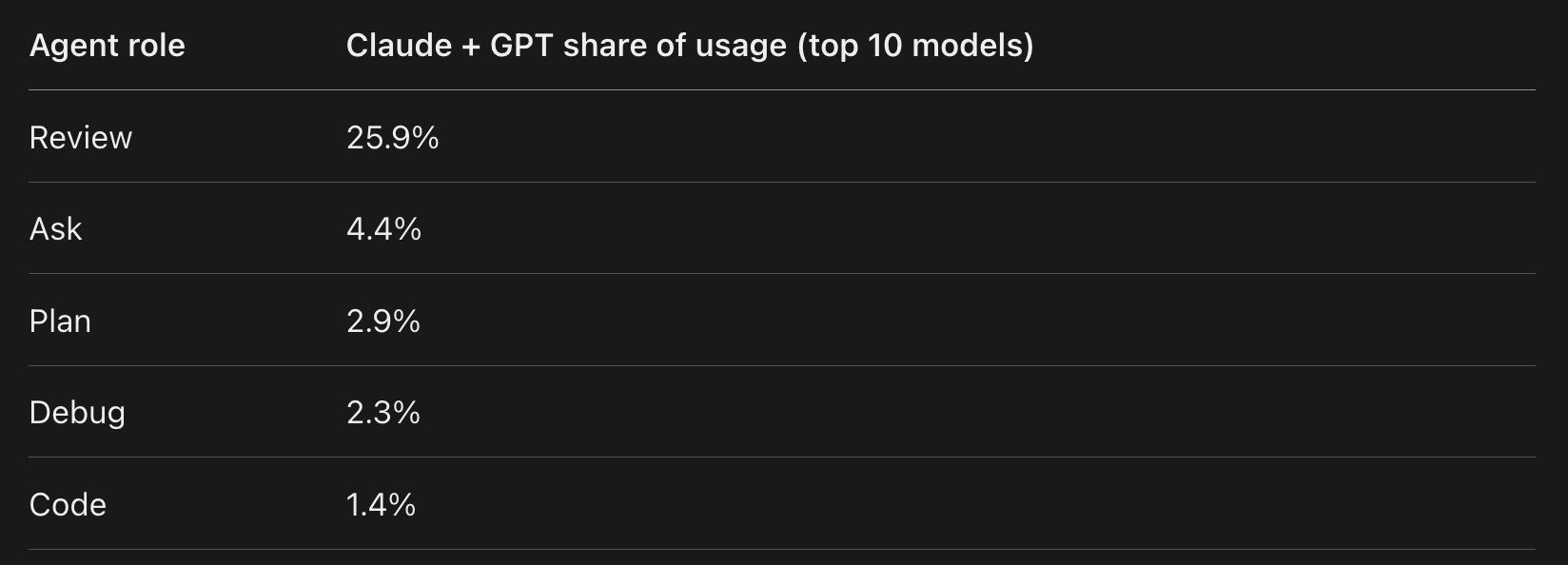
In review, Claude Opus alone takes 11.5% of usage and GPT models add another 14.4%. In code, the only frontier model in the top 10 is gpt-6-luna at 1.4%.
Developers appear to use cheaper models to write and fix code, then pay for a stronger model at the point where mistakes get caught.
Open models are running on teams’ own hardware
Another story came out today about Revolut, and how it now serves a self-hosted open model, GLM 5.3, as the default coding model for about 2,000 of its engineers. David Abitbol, who leads AI operations at the bank, described the setup at AI Engineer NYC on October 13, and the talk spread widely on X this week.
The move started with cost. Abitbol said some engineers were spending $1,000 to $10,000 a month on frontier coding tools “with not so much ROI.” Revolut began self-hosting in April 2026 with GLM 5.1 and now runs GLM 5.3 on about 56 Nvidia B200 GPUs, at a blended cost of about 30 cents per million tokens. By his account, the bill is one tenth of what Revolut spent on Anthropic and OpenAI.
The bigger result was speed. Revolut measured a 70% improvement in lead time and a 60% improvement in coding time after moving to self-hosted GLM 5.1. Abitbol’s explanation is that a flat bill meant engineers stopped rationing tokens and started using AI for Jira, Confluence and inbox work too.
A default you control, and frontier models where they earn it
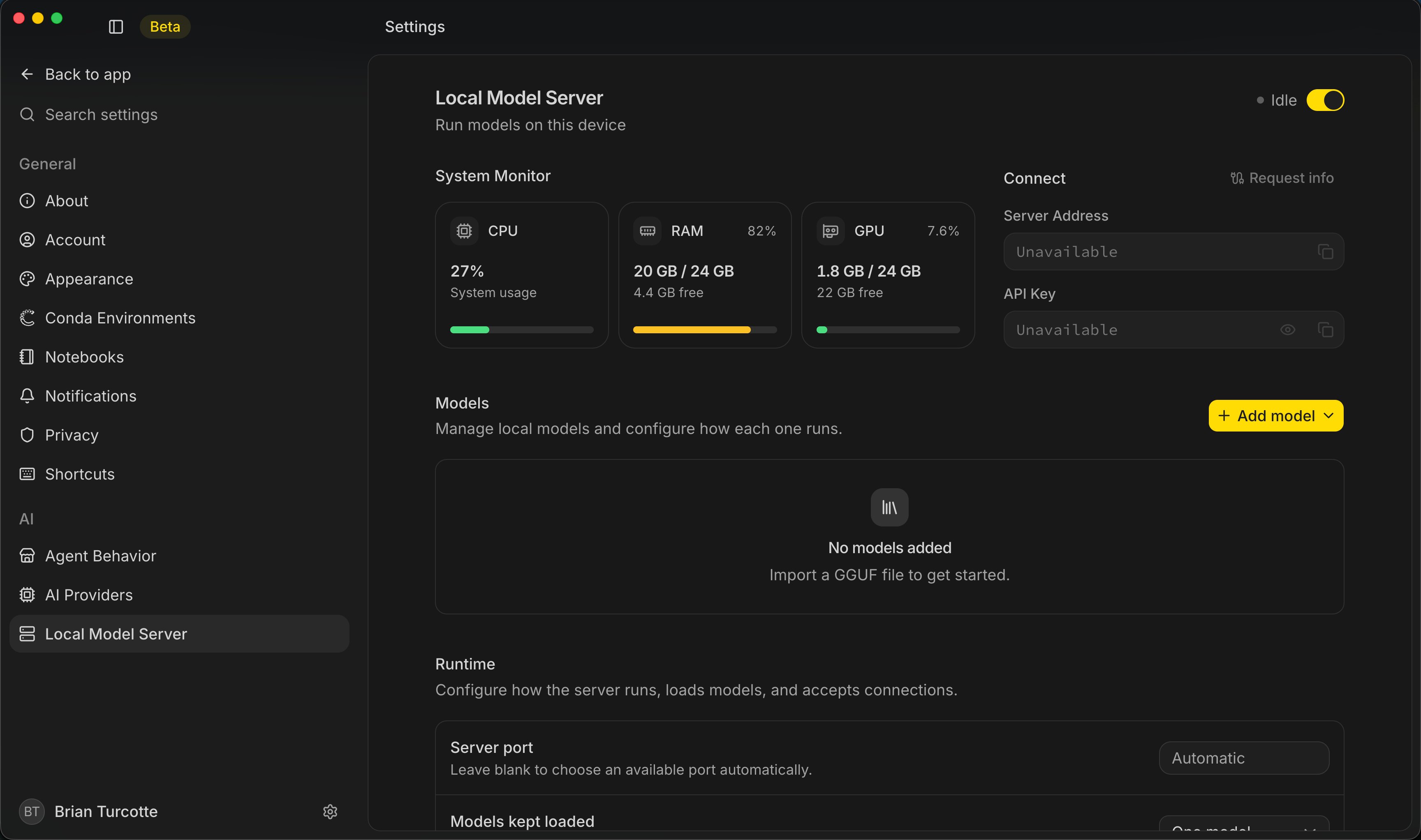
Both trends lead to the same setup: a cheaper model you control handles routine work, and frontier models are saved for the steps where they pay off - and if your hardware can handle it, local AI has been proven to work at enterprise scale.
You can set this up in Kilo today:
Pick a model per agent. Set per-agent defaults on the Settings → Models tab or in
kilo.jsonc, so Code and Debug can run on an open model while review uses a frontier one. See Model Selection.Connect a local or self-hosted model. Kilo Desktop lets you load and use local models directly in the app. Install here
Let routing pick the cheapest model that works. Auto Efficient (
kilo-auto/efficient) sends each request to the cheapest model proven accurate enough for that task.
The live usage numbers behind the tables above are at kilo.ai/models, and they will keep shifting as new open models land