

There has been a lot of discourse over the extended winter break about where AI is taking software engineering.
I weighed in, along with other people I respect a lot, like Lee Robinson from Cursor, and Janna Dogan from Google, DHH from Rails. And I’ve some strong reactions to all, saying that this is just fear mongering, or “Oh great, another post telling us we HAVE to use AI or we’re DONE.”
Or worse, associating us with the real AI maximalists who are fear mongering, like recruiters using it to scare candidates. (“Learn AI or lose your job!”)
But that’s not what I said, and it’s not what the smartest people in our industry like Lee, Janna, and DHH are actually saying. So let me be clear:
I don’t want you to fear AI, I want you to be curious about it.
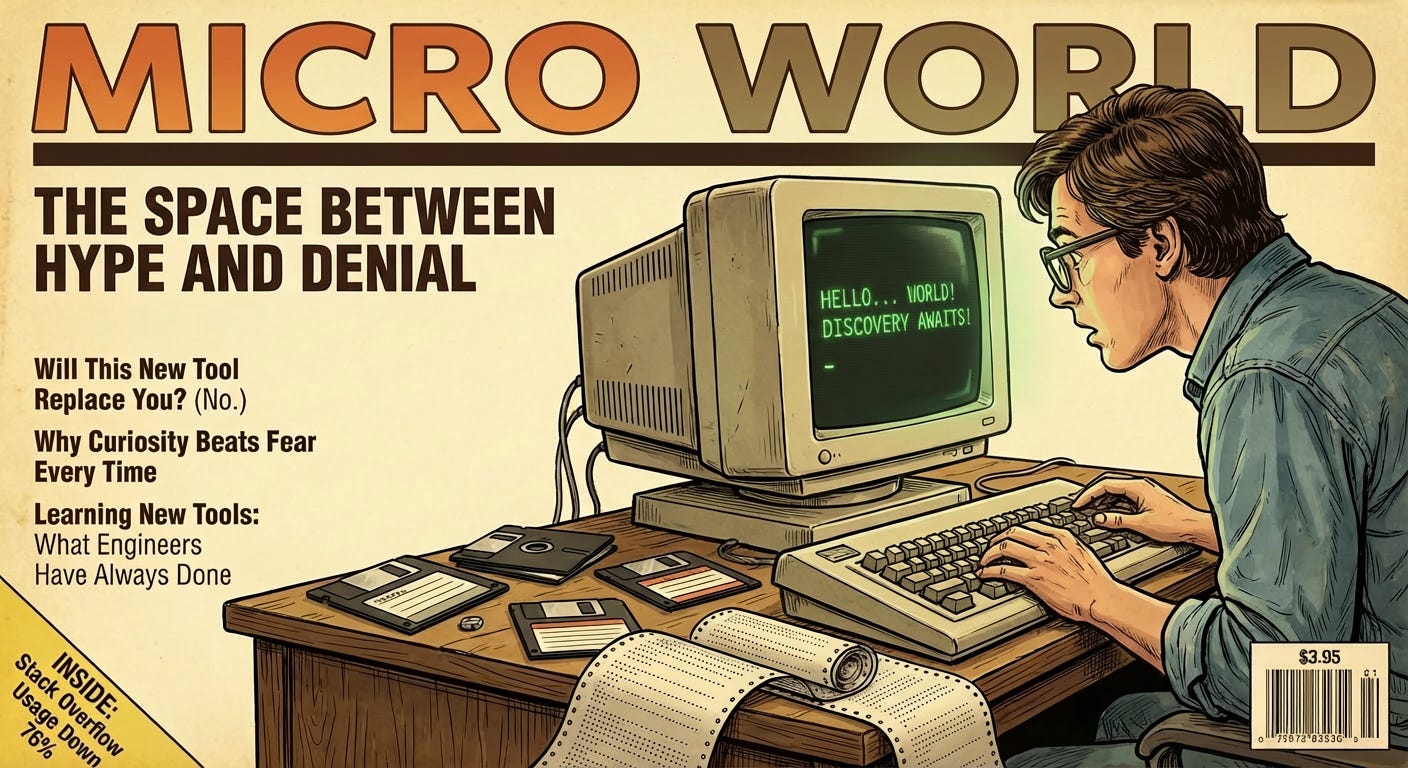
Fear Factor(y)
The frustrating part is that the people who have made it the hardest to have an honest conversation about AI coding tools are, ironically, the AI companies themselves.
For the past two years, we’ve been bombarded with predictions that software engineers would be obsolete “within six months” or “by 2025.” Other AI executives echoed it. The doomers ran with it.
And what happened? Software engineers are still here. Still employed. Still solving hard problems that LLMs can’t figure out on their own. In fact, the major AI labs themselves are mostly hiring more engineers.
The predictions were wrong, and now there’s a trust deficit. When you’ve been told the sky is falling for two years and it hasn’t, it’s natural to tune out. The boy (bros?) cried wolf.
But dismissing the tools entirely because some people overhyped them is just as much of a mistake as believing the hype.
Friends (data) Don’t Lie
Since I wrote that last piece, more data has come in that’s worth paying attention to.
Greptile’s State of AI Coding 2025 report shows developer output up 76% year-over-year. Lines of code per developer grew from 4,450 to 7,839 as AI tools acted as a force multiplier. At the same time, median PR size increased by 33%, from 57 to 76 lines changed per PR.
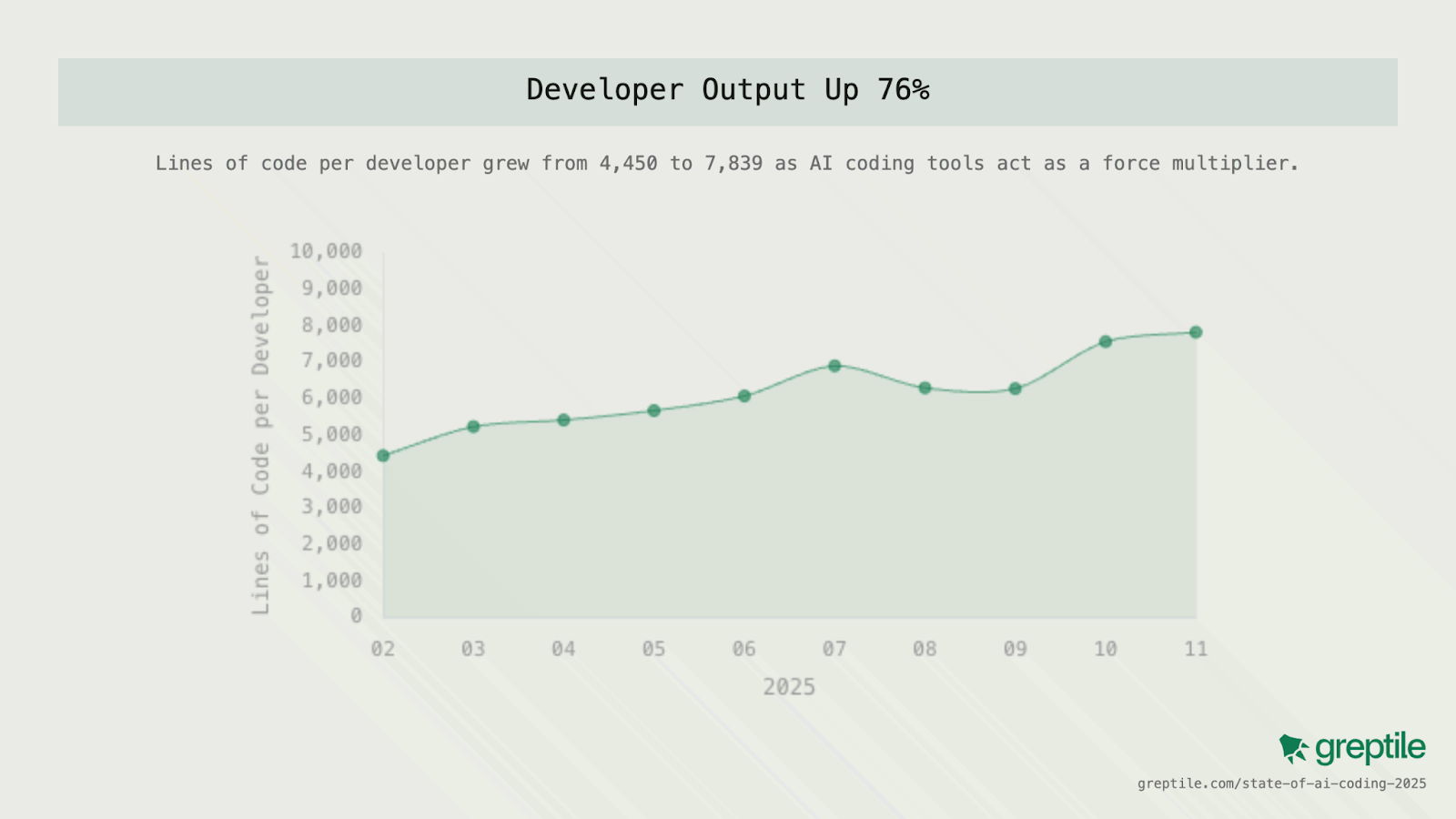
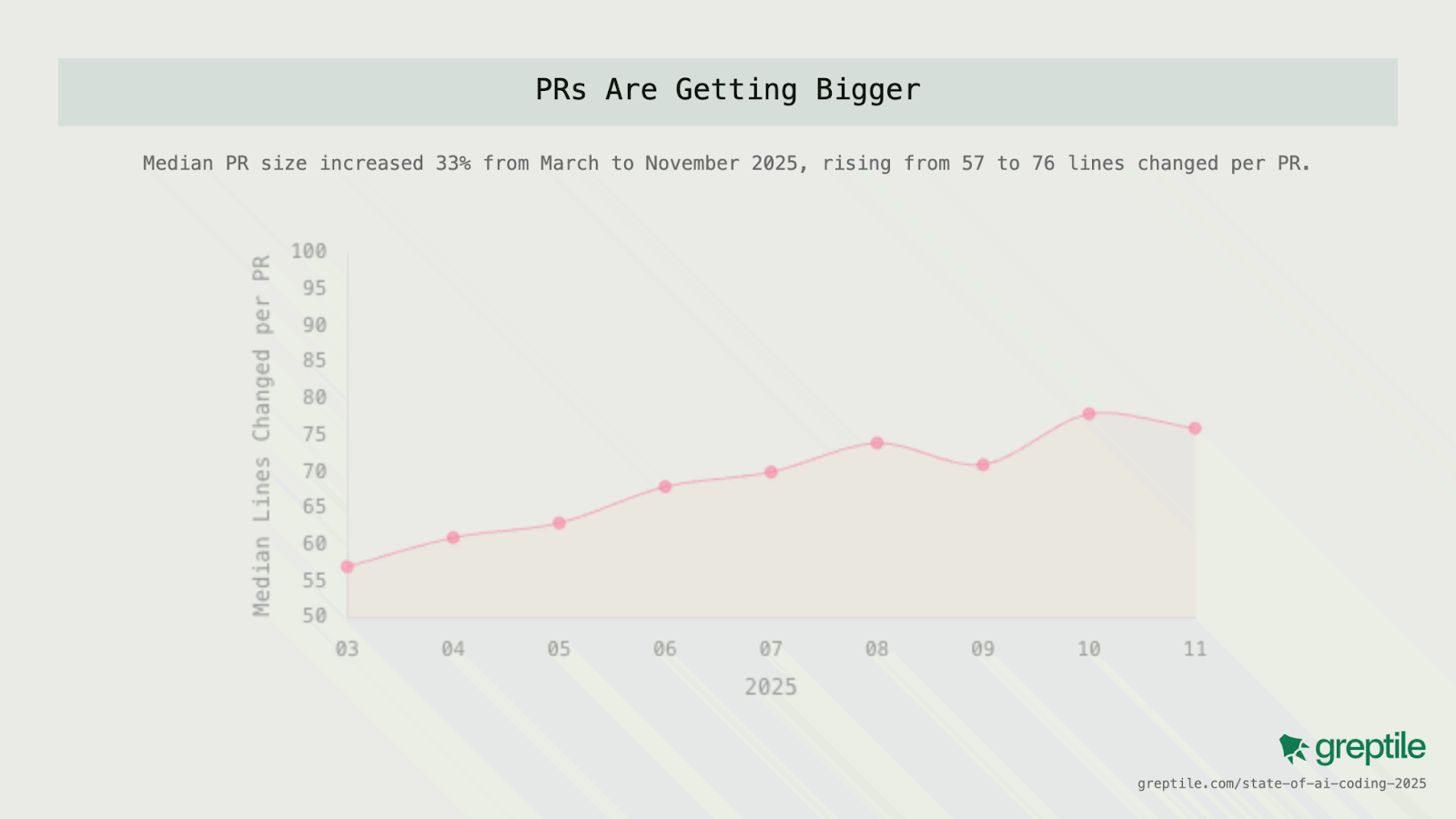
What does that tell us? Developers are shipping more, and they’re shipping bigger chunks of work at a time.
Meanwhile, there’s this:


Now, you can interpret this a few ways. Maybe developers are just searching less. Maybe the documentation got better. Or maybe—and I think this is the obvious answer—developers are asking their questions to AI instead of posting them on Stack Overflow and waiting for someone to tell them it’s a duplicate.
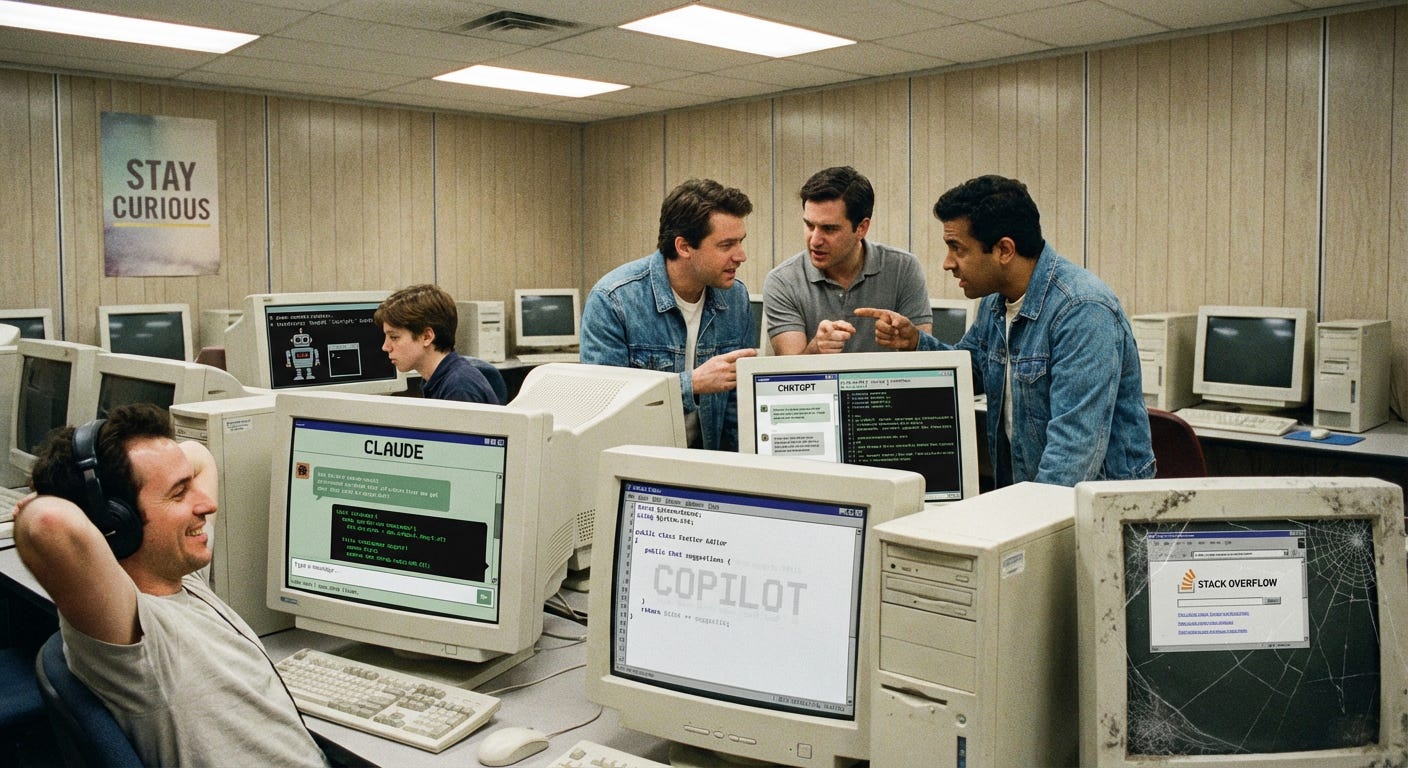
The behavioral shift is real. Developers are changing how they work.
The Developer Community has Always Had Camps
Jaana Dogan nailed this recently:

That last group has always existed. They were there when IDEs replaced text editors. They were there when high-level languages replaced assembly. They were there when version control became standard. And they’re here now, insisting that “real developers” don’t need AI.
Those people have always been wrong. Not because the old ways were bad, and not because the new ways were the only way to do things, but because refusing to learn new tools is a choice to be less effective than you could be. DHH—who built Rails, who has opinions about everything, who is definitely not a hype merchant—put it this way:

That’s the framing I want people to take from this: not fear but curiosity.
Engineers Learn New Tools. That’s What We Do.
Let’s zoom out for a second.
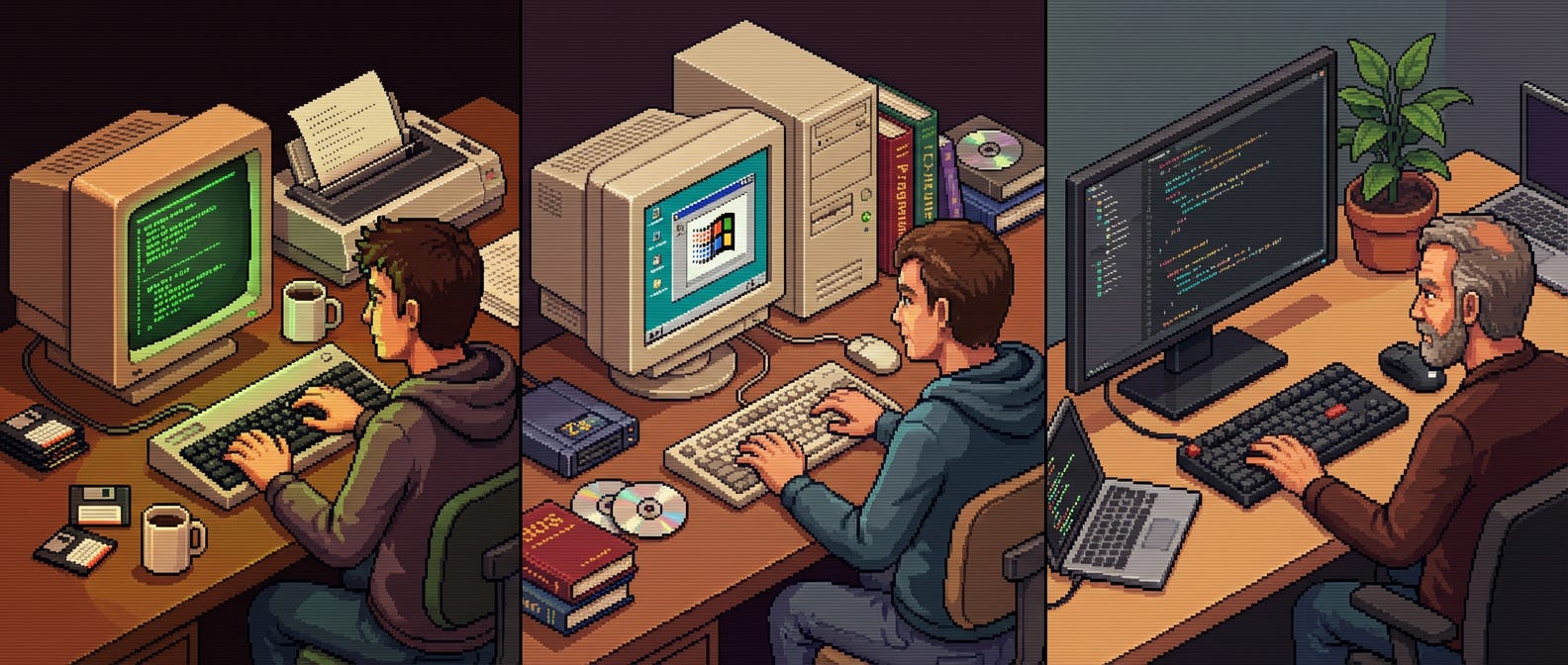
Every few years, the industry shifts. New languages emerge. New frameworks become dominant, and new paradigms take hold. And every single time, some engineers embrace the change while others dig in and resist.
I remember when people insisted you didn’t need to learn Git because SVN was “fine.” I also remember when DevOps was just “ops with a fancy name” and containers were a fad that would never work in production.
To be fair, those technologies were also overhyped. DevOps consultants promised the moon. Docker evangelists acted like containers would solve world hunger. Git zealots were insufferable. The hype cycle was real, and plenty of it was annoying or flat-out wrong.
But the hype being overblown didn’t mean the underlying tools were useless.
Git actually was better than SVN for most workflows. Containers actually did transform how we deploy software, and DevOps principles really did improve how teams ship code. The hype merchants were wrong about the timeline and the magnitude, but they weren’t wrong that something real was happening.
The engineers who stayed curious—who learned the new tools even when the marketing around them was obnoxious—consistently came out ahead. They didn’t have to abandon everything they knew, they just added new capabilities to their existing skillset.
AI coding tools are another tool in that lineage, with an important distinction.
Why is this Tool Different from All Other Tools?
AI is non-deterministic. The same prompt doesn’t always give you the same output. The model might nail it on the first try or hallucinate nonsense. It might work perfectly on your codebase and fail on someone else’s. So this isn’t like learning a new framework where you read the docs, understand the API, and get predictable results.
Working effectively with AI is less like learning a new programming language and more like learning how to work with a very fast, very well-read, somewhat unreliable junior developer. The mental models, feedback loops, and failure modes are different.
Because the question isn’t “Will AI replace me?”
It’s “How do I use AI as a multiplier for my engineering work?” And answering that question well requires treating this as a new skill to develop, not just a plugin to install.
What I AM Saying
AI coding tools have crossed a threshold. The senior engineers I respect most are using them daily. The data shows measurable productivity gains. The behavioral shifts are visible everywhere.
If you tried these tools in 2024 and wrote them off, your experience is outdated. If you’ve never tried them at all, you might be missing something useful. If you’re using them but just for autocomplete, you’re probably not getting the full picture.
None of that is fear-mongering—it’s just observation from the facts as I see them, and I’m not alone.
Engineers have always learned new tools. This is another new tool. The only unusual thing is how quickly it’s changing.
Stay curious. That’s all.
—
This is something I’ve been thinking about a lot, and it’s why I’m building out Learn Agentic Engineering—free content on YouTube now, with a paid certification coming soon. It’s my first attempt at articulating what it actually means to be effective with these tools.
it's like when people said computers will take away your job. But it came out to be just a TOOL
Big fan of Kilo Code articles, thanks.