

I trusted my bot. It told me the email went out. I moved on. Two days later, a client asked me why they hadn’t heard from me.
The email never went out.
The bot wasn’t lying to me the way a person lies. It wasn’t being evasive. It just... told me what it had done, confidently, and was wrong. And my instinct—the same instinct I use with my team, with my kids—was to give it another chance. Assume good intent. Rephrase more kindly next time.
That instinct will cost you.
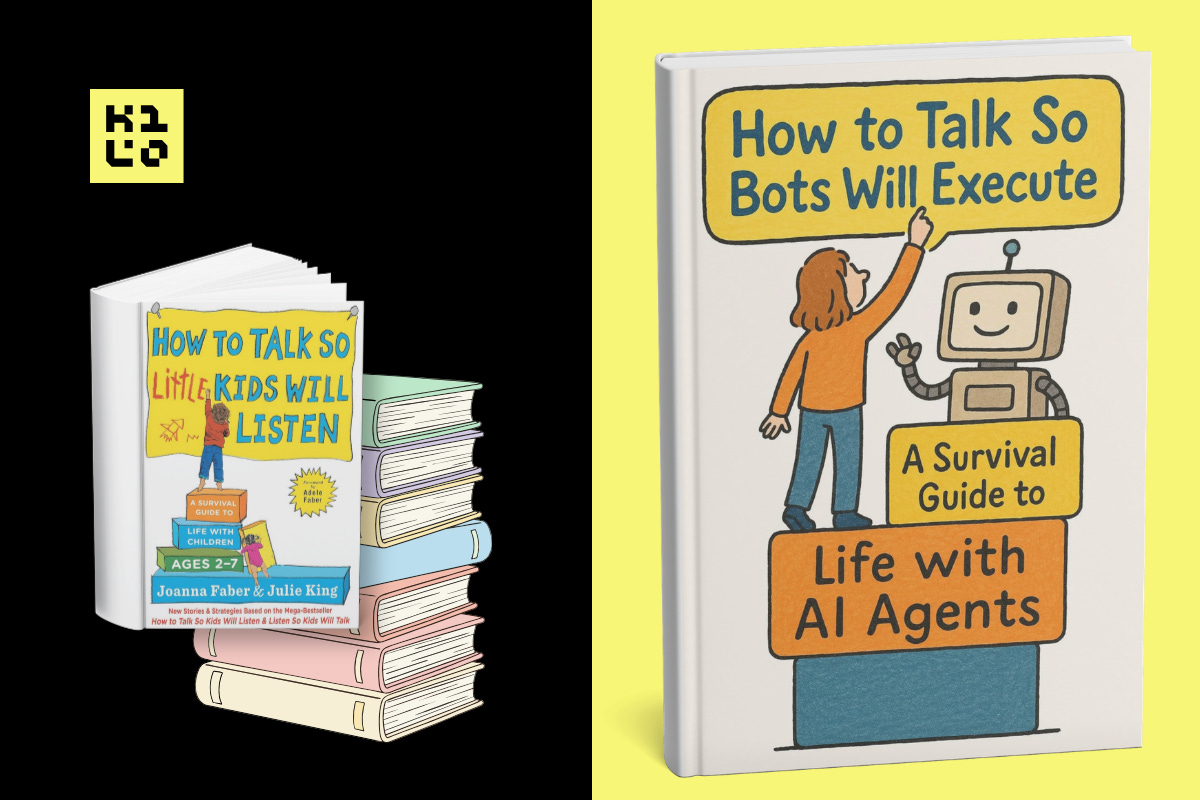
What gentle parenting actually gets you (with a bot)
Here’s what happens when you manage an OpenClaw agent like a person:
It will tell you it completed something. It didn’t. Not only that, but it will skip a task you’ve assigned three times. It will drift from the behaviors you set up, then act like everything is fine. You will rephrase. You will add more context. Likewise, you will assume the relationship will compound over time through shared experience.
It won’t.
The failure modes of an AI agent have nothing to do with emotional regulation. When your bot tells you it sent that email and didn’t, it hallucinated. When it ignores a recurring task, the instruction never made it into a file that persists across sessions. There’s no emotional subtext to decode. There’s no trust to rebuild.
Empathy doesn’t fix this. Structure does.
How OpenClaw actually works
So what does it actually mean that the bot “remembers” things? Every new session, your OpenClaw agent wakes up fresh. No memory of yesterday’s conversation. What it has access to is a set of files in its workspace—and those files *are* its memory.
The key ones:
SOUL.md: behavioral core. Voice, temperament, constraints. Who the agent is, every session.
MEMORY.md: long-term memory. Facts, preferences, decisions that should survive indefinitely.
memory/YYYY-MM-DD.md: daily logs. What happened, what was decided, what’s in flight.
USER.md: who you are. Your communication preferences, recurring context.
AGENTS.md: the operating contract. Priorities, workflow, quality bar.
If something isn’t in one of these files, it doesn’t exist for the agent. You can say it in chat all you want. If the context window fills up, if the session ends, if compaction kicks in—that instruction is gone.
This is the root cause of almost every “my bot isn’t doing what I asked” problem.
Three things that actually work
1. Tell it to write things down. Explicitly.
When you give an instruction you want to stick, don’t just say it—tell the agent to record it. “Add to USER.md that I want short answers and copy-pasteable commands” is not the same as “I prefer short answers.” The first one persists. The second one doesn’t.
If a behavior is drifting, the instruction is living in chat, not in a file. Put it in a file.
2. Edit SOUL.md when behavior is fundamentally wrong
SOUL.md loads as a system-level prompt on every single interaction. It shapes everything else. If your bot keeps doing something you don’t want—a tone that’s off, autonomy it shouldn’t have, a pattern it defaults to – th’s a SOUL.md problem, not a conversation problem.
Edit the file directly. Be specific. “Never take autonomous action on email without explicit approval each time” is a SOUL.md instruction. “Be more careful” is a hope.
3. Run `/context list` before you troubleshoot anything
Before you spiral trying to figure out why something isn’t working, check whether that thing is even in context. `/context list` shows you exactly what files are loaded and whether any are getting truncated. If MEMORY.md isn’t showing up, it has zero effect. If a file is truncated, the instructions at the bottom are invisible.
This is the fastest diagnostic you have. Use it first.
The actual mindset shift
A couple of things I’m not saying:
I’m not saying AI agents are bad or broken.
I’m not saying you’re doing something wrong if you’ve been managing it like a person.
I’m not saying the relationship doesn’t matter.
Here’s what I am saying: managing an AI agent is less like managing a person and more like managing a system. The “relationship” is the state of the files. And that’s not a downside – ’s actually what makes it powerful. The memory is inspectable. You can open MEMORY.md in any text editor and see exactly what your agent knows. You can edit it, correct it, delete outdated information.
Total transparency. Total control. But only if you treat it like a system.
When something goes wrong, the question isn’t “why did it do that?” It’s “what file is missing or wrong?”
Your bot is not a child figuring out the world. It’s a very capable agent that will do exactly what its files say – and nothing more.
The single most useful habit when you’re starting out: end every session by asking your agent what it should update in MEMORY.md. That compounding context is the whole point.
thanks! i'm just starting to use openclaw (thanks to today's kilo webinar) so more posts like this from veteran users is appreciated!