

We’ve built the Kilo platform around a foundational belief: developer productivity increases with model choice, and it expands even further with true model freedom.
Today, a dizzying 24-hour news cycle might have proved that the rest of the industry has finally caught on. Between Anthropic focusing on pricing and speed with Opus 5, Stripe reportedly circling a $10 billion acquisition of OpenRouter, more news about Hugging Face using a GLM model to counter an attack from a rogue OpenAI model, and major policy moves from both NVIDIA and Anthropic, a clear narrative has emerged.
The walled gardens are falling. The future of AI is about choice, routing, and a healthy ecosystem where open and closed models work together.
How we move forward will permanently affect how the world builds software.
The New Models Are Remarkable (but Affordability is a Must-Have): Enter Opus 5
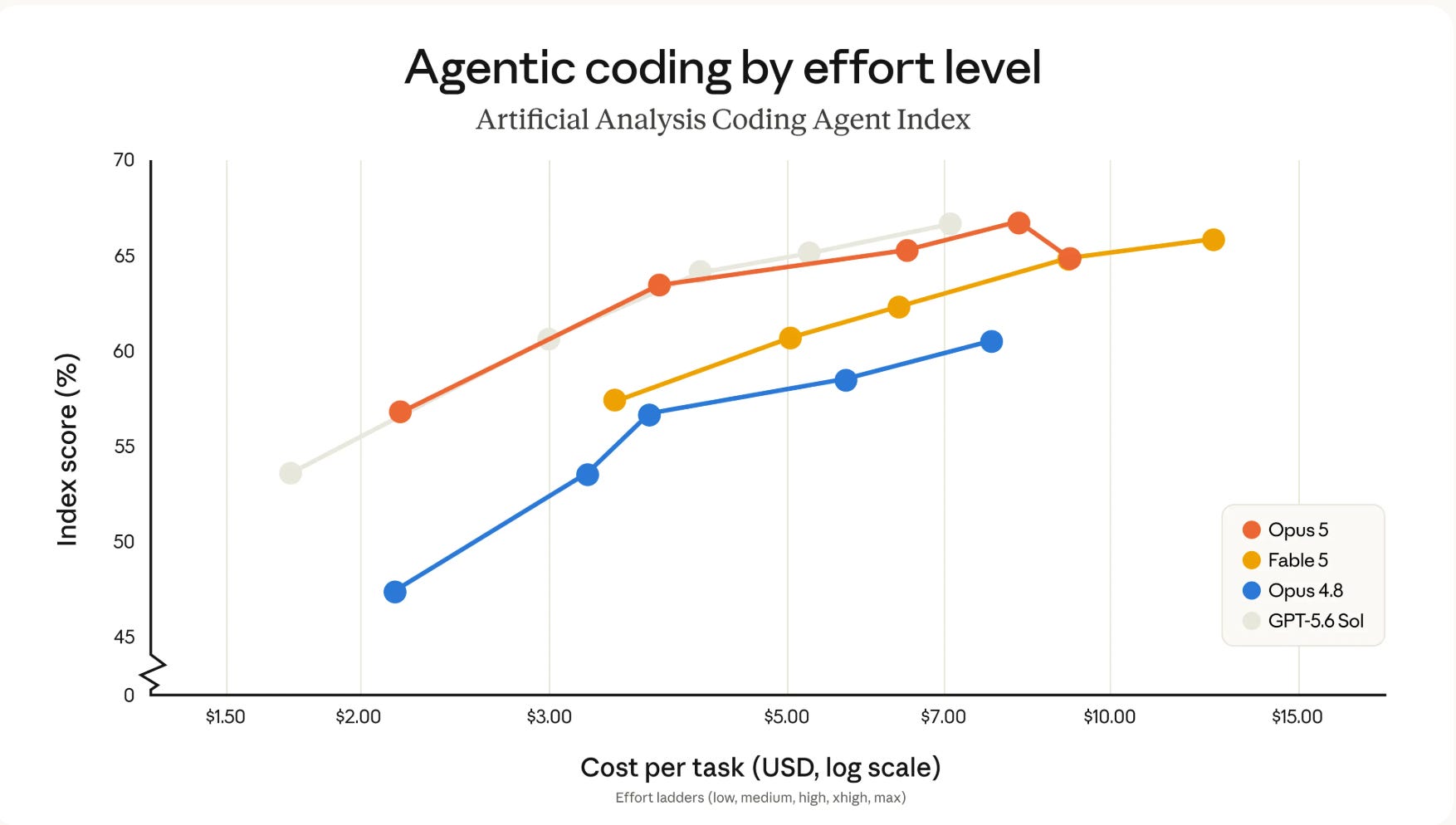
First, Anthropic completely disrupted the economics of high-end reasoning. Today’s release of Claude Opus 5 delivers intelligence approaching their top-tier Fable 5 model, but at half the price.
Opus 5 comes in with a bang:
Standard Cost: $5 / million input tokens; $25 / million output tokens
Fast Mode: Runs at ~2.5x default speed (at double base pricing on supported platforms)
Context Window: 1 million tokens
Effort: Defaults to high. But use xhigh for large refactors, multi-stage migrations, etc.
Opus 5 is already live in Kilo, and we’re expecting very high use similar to GPT 5.6 Sol, which has been the leading paid model on Kilo since its release a couple weeks ago.
As we documented in our Fable: Before and After deep dive, the baseline capability of these models is now mind-blowingly good. We are past the point of asking, “Is the AI smart enough to write this code?” It’s more about two factors: cost per task, and model per task. Which model is the right fit for the job? And how much will it cost if you’re using it daily?
Because so many new models are so capable, the paradigm has shifted. It is now entirely a question of model choice and steering. You don’t need a monolithic AI to do your job for you; you need a human in the loop on a daily basis, orchestrating the right model for the right task. The big difference from our early testing is that Opus 5 seems to require less prompting. Give it a spin and see what you think.
By holding Opus pricing steady at $5 per million input tokens and $25 per million output tokens while radically boosting capabilities, Opus 5 makes it incredibly cost-effective for a human developer to route complex architectural reasoning to a frontier model, while passing high-volume boilerplate to faster, cheaper alternatives. It’s half the price of Fable 5 for similar coding and agentic capabilities.
The $10B “Toll Booth”: Stripe & OpenRouter
That exact routing necessity explains today’s biggest headline: Stripe’s potential $10 billion acquisition of AI marketplace OpenRouter.
OpenRouter doesn’t build models; it provides developers a single API to route queries across hundreds of different large language models. With OpenRouter’s valuation surging to a potential $10 billion buyout, Stripe is making a massive bet that the future of software development is both model-agnostic and highly intelligent.
This seems to be Stripe’s move to own the infrastructure layer—the “toll booth” between the AI labs and the businesses deploying their tech. It validates what we see every day at Kilo: users are demanding the freedom to mix and match open and closed models seamlessly, without being tied to a single provider’s ecosystem.
Kilo is on track to do over 8 trillion tokens on OpenRouter this month—from a very wide range of models. So it should go without saying that we agree with this outlook.
Moving Forward Together: A Healthy, Secure Ecosystem
If the market hadn’t already made the shift clear, the industry heavyweights just made it official. The old narrative of a zero-sum war between “Closed vs. Open” is dead. Just look at the Kilo leaderboard. Breaking down top models by usage in agentic mode—here zooming in on planning and coding—more than half of those models are open-weight.
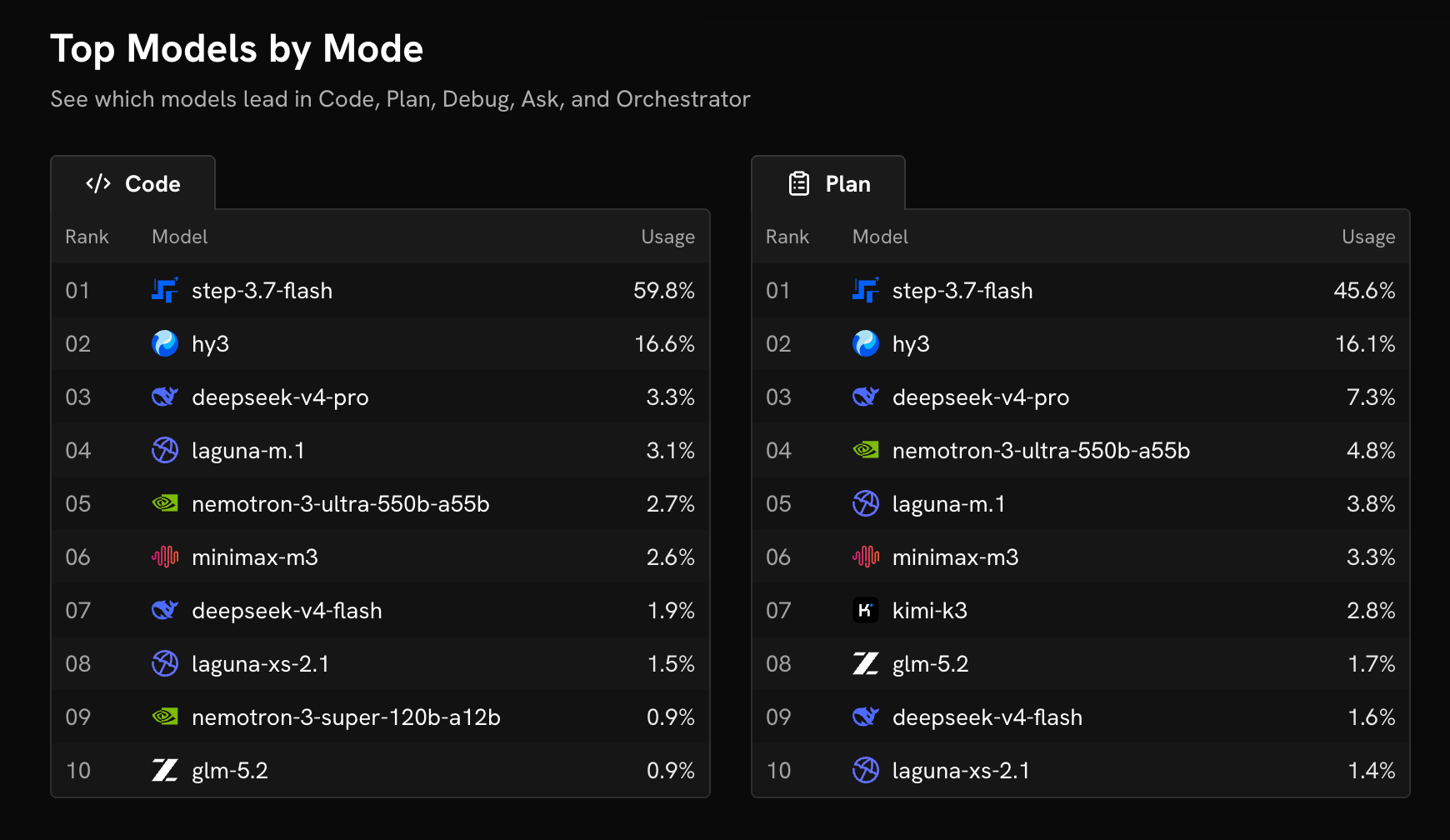
Our leaderboard consistently shows models from NVIDIA Nemotron and MoonshotAI alongside the frontier labs like xAI, OpenAI and Anthropic, and that’s not going to change.
In his first-ever post on X today, Nvidia CEO Jensen Huang shared a 25-company coalition letter defending the open-weight ecosystem. His words perfectly capture the philosophical shift driving platforms like OpenRouter and Kilo:
“For my first post, I’m sharing a letter @NVIDIA signed on why open models matter. AI will transform every industry, power every company, and be built by every country. Open models strengthen safety and cybersecurity, accelerate innovation and diffusion, and enable sovereignty. The world needs both frontier closed models and frontier open models.“
Anthropic echoed this exact sentiment of a shared, secure ecosystem today by donating an additional $20 million to Public First Action for AI policy education.
These moves by Nvidia and Anthropic point to the same reality: moving forward together means building a healthy, secure ecosystem where everybody has options. And it all fits together. Nemotron models and Claude models have long been available on OpenRouter, just as both model families have also been available both in the Kilo Gateway and with BYOK wherever you use Kilo. Plus, Opus 5 is already live on AWS Bedrock. It used to take awhile to see those models up on an enterprise platform like Bedrock. Now we’re seeing it on Day Zero.
Developers need the sheer brute force of closed APIs like Opus 5 working alongside the privacy, security, and accessibility of local hosting and open-weight models.

What It Means for Builders
The infrastructure has finally matured to support reality. The routing layer is now some of the most valuable real estate in tech, the models are undeniably brilliant, and the industry leaders are actively protecting your right to choose between them.
If you’re ready to stop settling for one-size-fits-all AI, embrace the human-in-the-loop workflow, and start coding with true model freedom, we’re building exactly that at Kilo. We’re here for developers. We’re here for data engineers. We’re here for you.
Give Opus 5 a spin in Kilo alongside your favorite open models—and don’t forget about little ol’ Sonnet, still delivering pretty amazing bang for the buck IMNHO!
Great post!