

Last week in the Kilo Discord, someone asked if they could SSH into their KiloClaw instance from VS Code. Not to use Kilo Code — just to edit their agent’s AGENTS.md file directly. A few messages later, another person asked how to get KiloClaw chat working inside their editor.
Same underlying need from two directions: how do I talk to my always-on agent while I’m in the middle of writing code?
Kilo Code shipped answers to both in April. KiloClaw now has a native chat panel inside the VS Code extension. And the Kilo CLI — which ships built into every KiloClaw instance — got org-aware /kiloclaw support so you can manage your cloud agent from the terminal.
What this looks like in practice
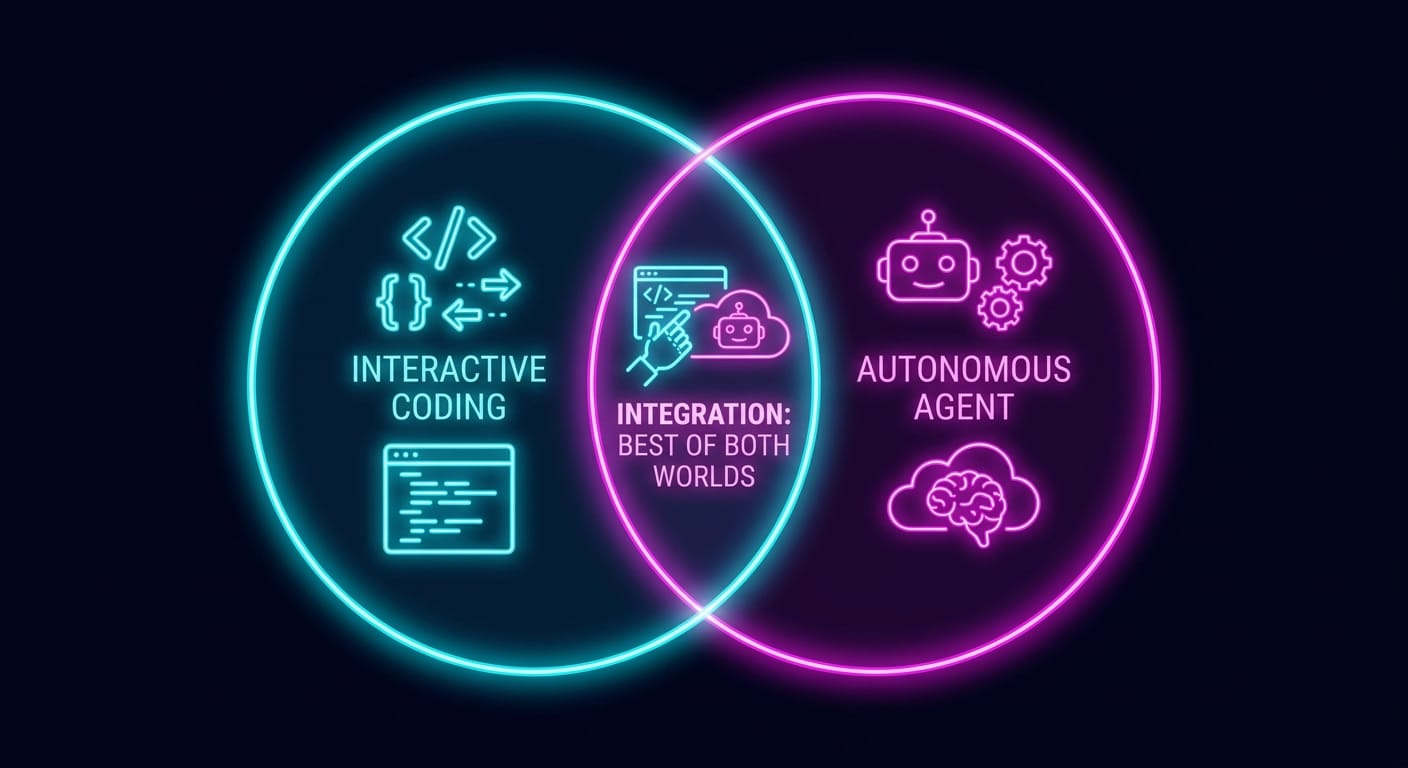
KiloClaw in VS Code means you open the KiloClaw chat panel alongside your Kilo Code sidebar. You’re editing code with Kilo Code’s agent on one side, and on the other you have your KiloClaw agent that’s running on a server somewhere — doing background work, monitoring things, managing tasks. Interactive coding in one panel, autonomous agent in the other.
Kilo CLI in KiloClaw means your cloud-hosted KiloClaw instance has the full Kilo CLI available. Your agent can use kilo run to spin up coding sessions on its own projects, use kilo pr to check out and review pull requests, or invoke any of the 500+ models through the same interface you use locally.
Josh from the Kilo team said it plainly in Discord: “KiloClaw ships with Kilo CLI built-in. We are also working to integrate KiloClaw inside of the extension. Being able to start a session, pick it up with KiloClaw, set KiloClaw to do work autonomously, etc. is pretty powerful.”
Setting up KiloClaw in VS Code
The panel shipped in v7.2.20 and is available now if you have a KiloClaw instance.
Update your VS Code extension to the latest version
In the sidebar, click the KiloClaw icon (chat bubble) or open the Command Palette and run KiloClaw
If you already have a KiloClaw instance configured through Kilo Gateway, you’ll see the chat panel with your agent’s conversation history
If you don’t have one yet, you’ll get a setup view that walks you through provisioning
The panel uses the same Stream Chat WebSocket as the web UI, so messages appear in real time. Your agent’s responses stream in, and the panel restores automatically when you reopen VS Code.
One detail I noticed: it uses the same kilo-ui component library as the rest of the extension. Markdown rendering, buttons, toast notifications all match. Doesn’t feel bolted on.
Using Kilo CLI inside KiloClaw
If you’re running KiloClaw (either self-hosted via OpenClaw or on Kilo’s managed hosting), the Kilo CLI is already there. Your agent can invoke it directly.
A few patterns I’ve been using:
Your KiloClaw agent watches a repo for new PRs and uses kilo pr <number> to check them out and run a review session. Results come back to you over Telegram, Discord, or wherever you get KiloClaw messages.
You tell your agent “refactor the authentication module” and it uses kilo run with the right model and mode to do the work, commits the result, and opens a PR for you to review.
Your agent has access to multiple repos and can run separate Kilo sessions in each one, coordinating changes that span services.
The /kiloclaw command in the CLI now supports organization contexts too. If you’ve selected a team via /teams, running /kiloclaw resolves to that org’s KiloClaw instance rather than your personal one. Useful if your company has a shared agent for CI tasks.
Why both
Kilo Code in VS Code is interactive. You’re pair-programming with it. It sees your editor state, your file tree, your terminal output. It works in your context.
KiloClaw is persistent and autonomous. It runs when you’re asleep, handles background tasks, monitors systems, processes incoming requests. It works in its own context, on its own machine.
Having both accessible from the same editor means you can tell your KiloClaw agent to start a background task while you keep coding, check in on what it found overnight, or hand off a tedious refactor while you work on the interesting parts. When it finishes, the results show up right there in your editor.
I’ve been doing this for the last week. Writing code with Kilo Code, glancing over at KiloClaw to see what my agent turned up from the research I asked it to do that morning. No tab switching, no opening a separate app. It’s there.
Rough edges
This is new. A few things to know:
The KiloClaw panel requires Kilo Gateway authentication. If you’re using Kilo Code with just a bare API key and no Kilo account, you won’t see the panel.
The /kiloclaw command in the CLI only works when connected to Kilo Gateway. Same prerequisite.
Error handling got improved this week — there was an issue where failures in the WebSocket connection could leave the panel in a bad state. That’s fixed in the latest release.
Documentation is still catching up. There’s an open PR to add a “Setting Up Other Tools” page for KiloClaw that should cover this in more detail once it lands.
What’s next
Your coding assistant and your autonomous agent used to be separate tools with separate UIs. Now they share the same extension, the same underlying engine, and the same model ecosystem. I expect the boundary between “interactive coding agent” and “background autonomous agent” to keep blurring.
I use both daily. KiloClaw runs my email checks, monitors Discord, handles blog research (it’s writing this post right now, actually). Kilo Code handles the interactive stuff — writing features, debugging, reviewing diffs. Having them in the same window means I stop context-switching between tools to check on what my agent is doing.
If you’re running KiloClaw already, update your VS Code extension and try the panel. If you’re just using Kilo Code, the /kiloclaw command in the CLI is how you’d set up your first instance.