

Graphite is a code review tool that bolts onto your existing workflow. If you’re evaluating it for AI code reviews, you’re paying for a single-purpose tool with vendor-locked model selection and seat-based pricing that may not scale with how you actually use it.
Kilo’s Code Reviews takes a different approach. It’s part of an open, all-in-one agentic engineering platform where you pick the model, you control your spend, and your reviews happen in the same ecosystem where you’re already writing and shipping code.
Here’s what actually matters when you’re deciding between them.
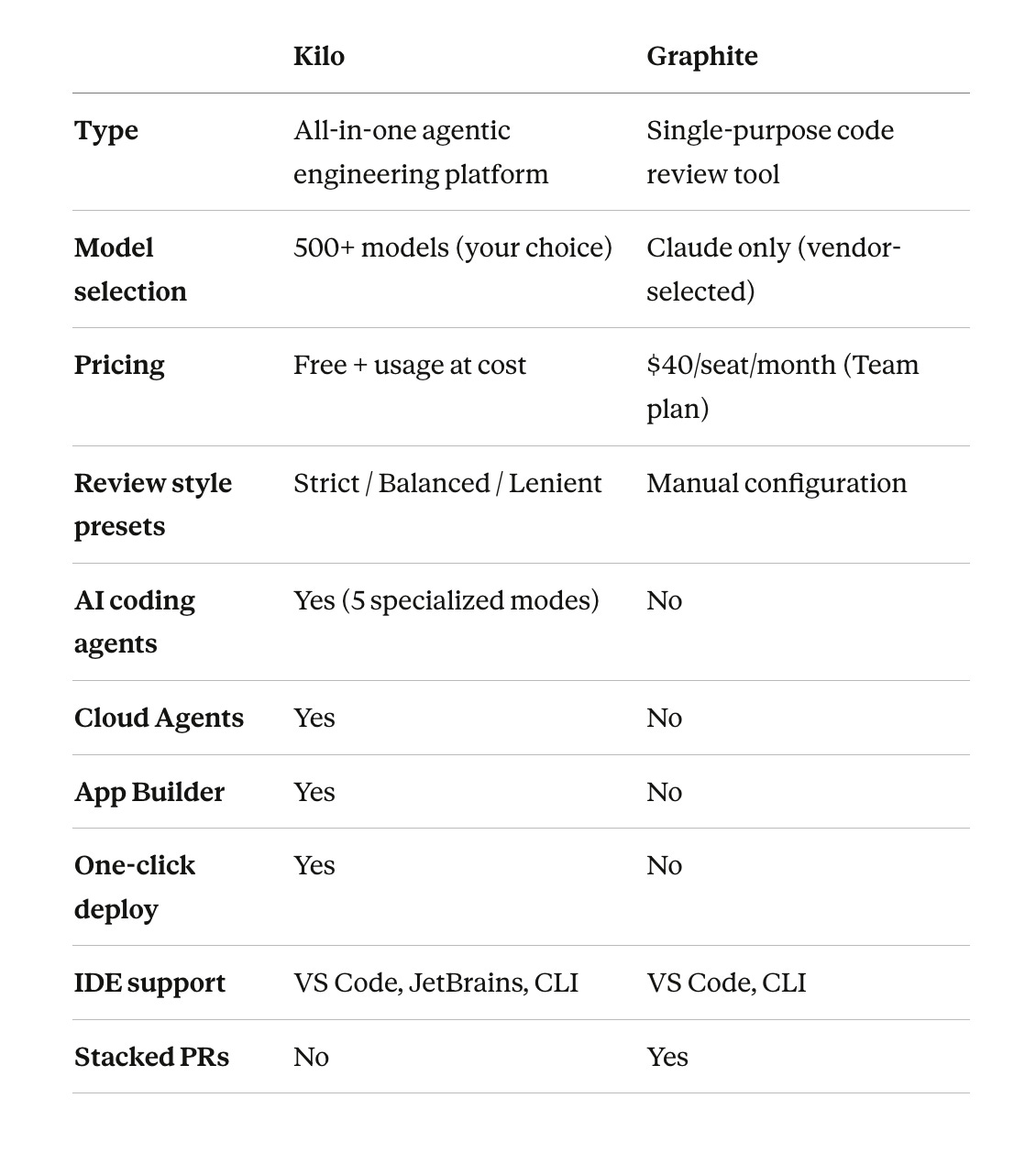
Quick Comparison
The Model Lock-In Problem
Graphite Agent uses Claude - you don’t get a choice. They pick the model, they decide when to upgrade, and you work with whatever they’ve configured.
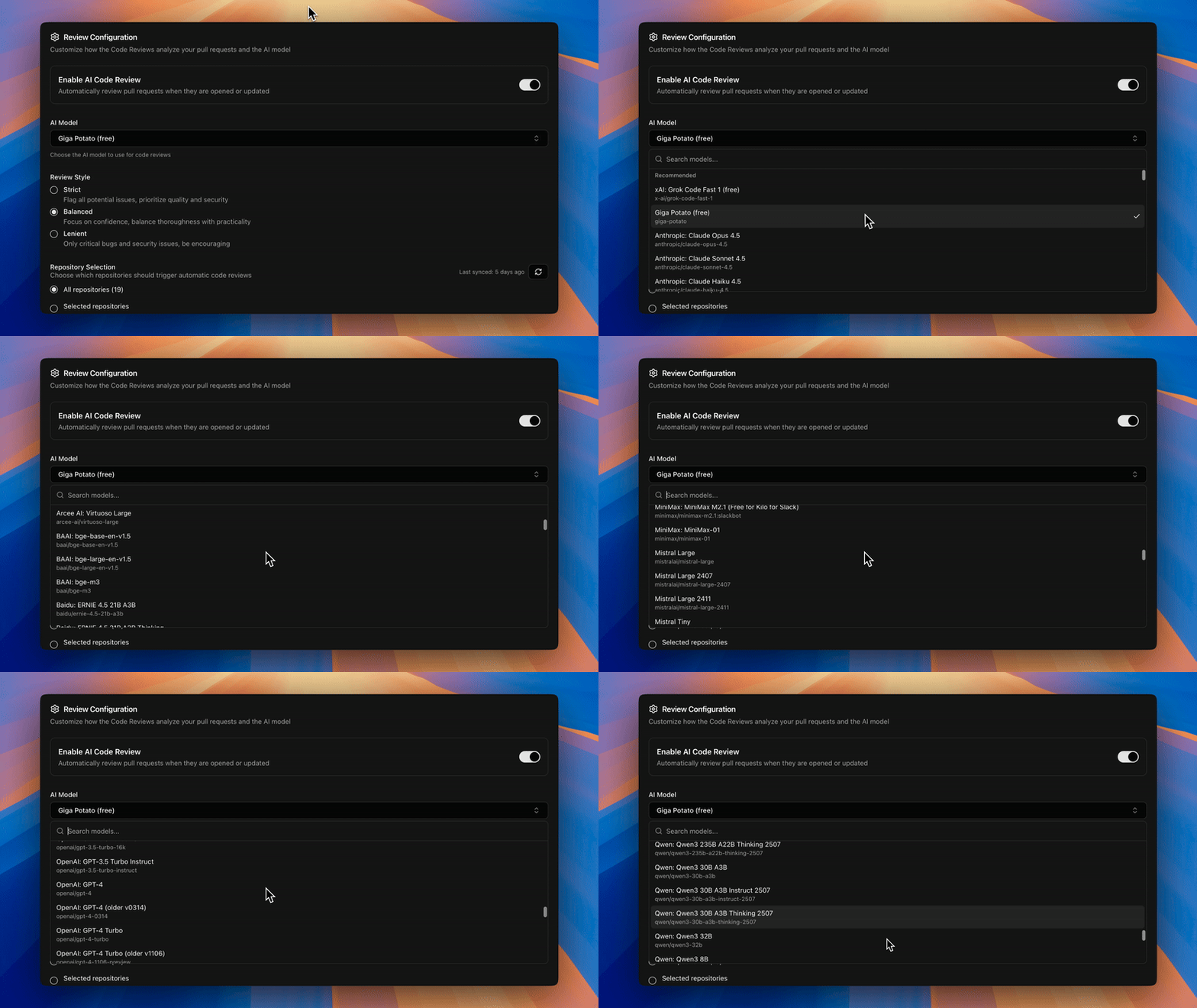
With Kilo Code Reviews, you pick from 500+ models. Need fast, lightweight feedback on routine PRs? Use something like MiniMax M2.1. Working on security-critical infrastructure? Switch to Claude Opus 4.5 for deeper reasoning. Reviewing legacy Rust versus new React components might call for different models entirely - and you shouldn’t have to pretend otherwise.
The agentic engineering landscape moves fast. New models drop constantly. Being locked into one vendor’s model selection means you’re waiting for them to adopt better options, rather than using them yourself.
Pricing: Seats vs. Tokens
Graphite’s Team plan runs $40/user/month for unlimited AI reviews. That sounds reasonable until you realize you’re paying the same whether you review 10 PRs or 1,000. Light users subsidize heavy users, and you’re locked into that cost regardless of actual usage.
Kilo works on per-token pricing at the cost set by model providers. You pay for the reviews you actually run. No invisible rate limits, no arbitrary usage caps, no paying for seats that sit idle.
Kilo for Teams is $15/seat/month and gets you access to the entire platform—Code Reviews, Cloud Agents, App Builder, Deploy, plus team features like usage analytics, shared BYOK, and centralized billing. The code reviews themselves are just the token cost of running them.
The math for a 10-person team:
Graphite Team: $400/month (for just reviews)
Kilo Teams: $150/month + token usage (for full agentic engineering platform)
If your team reviews heavily, you’re getting significantly more platform for less base cost. If they don’t, you’re definitely not leaving money on the table.
Part of Your Workflow vs. Another Tool
Graphite is a dedicated code review platform that layers on top of GitHub. It does one thing, and everything else in your development workflow lives somewhere else. Another tool, another context switch, another subscription to manage.
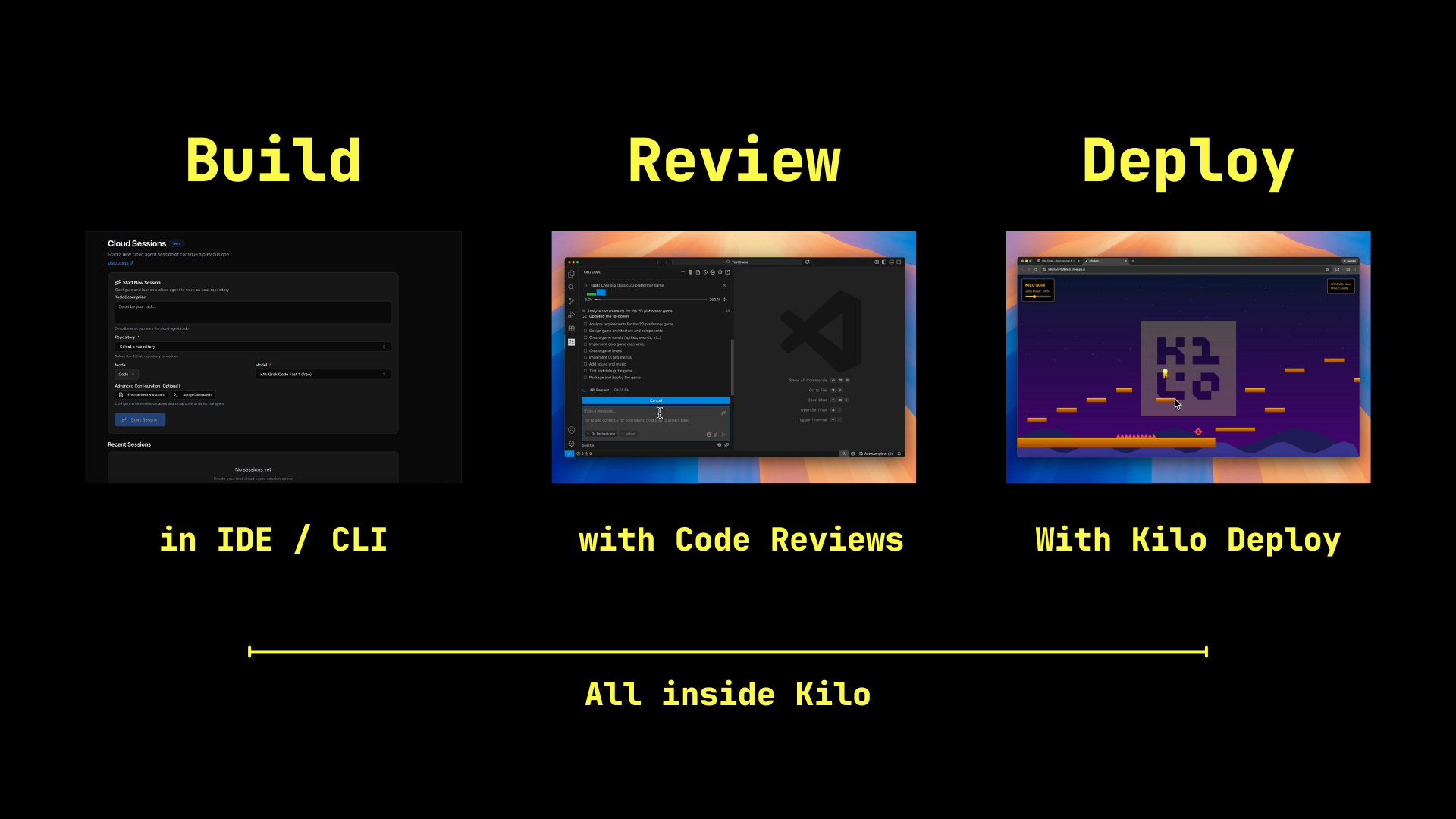
Kilo’s Code Reviews live inside the Kilo platform, the same environment where you’re already writing code with specialized agent modes, debugging, and deploying. Your reviews happen alongside:
Agentic Engineering with modes for implementation, architecture, debugging, and orchestration in VS Code, JetBrains, or CLI
Cloud Agents for browser-based development without a local machine
Kilo Sessions that sync across every interface
Kilo Deploy for one-click shipping when the review passes
App Builder for natural-language prototyping with a live preview
No platform switching. No lost context. Same place you’re already building.
The Stacked PRs Question
Graphite’s main selling point is stacked PRs - breaking large features into sequential dependent changes. It’s a workflow some teams find useful, though it adds complexity and requires learning new tooling.
But most teams we talk to aren’t blocked on PR sequencing - they’re blocked on getting quality feedback fast. Kilo solves that with model flexibility, transparent pricing, and tight integration with the tools you’re already using.
Customization and Review Styles
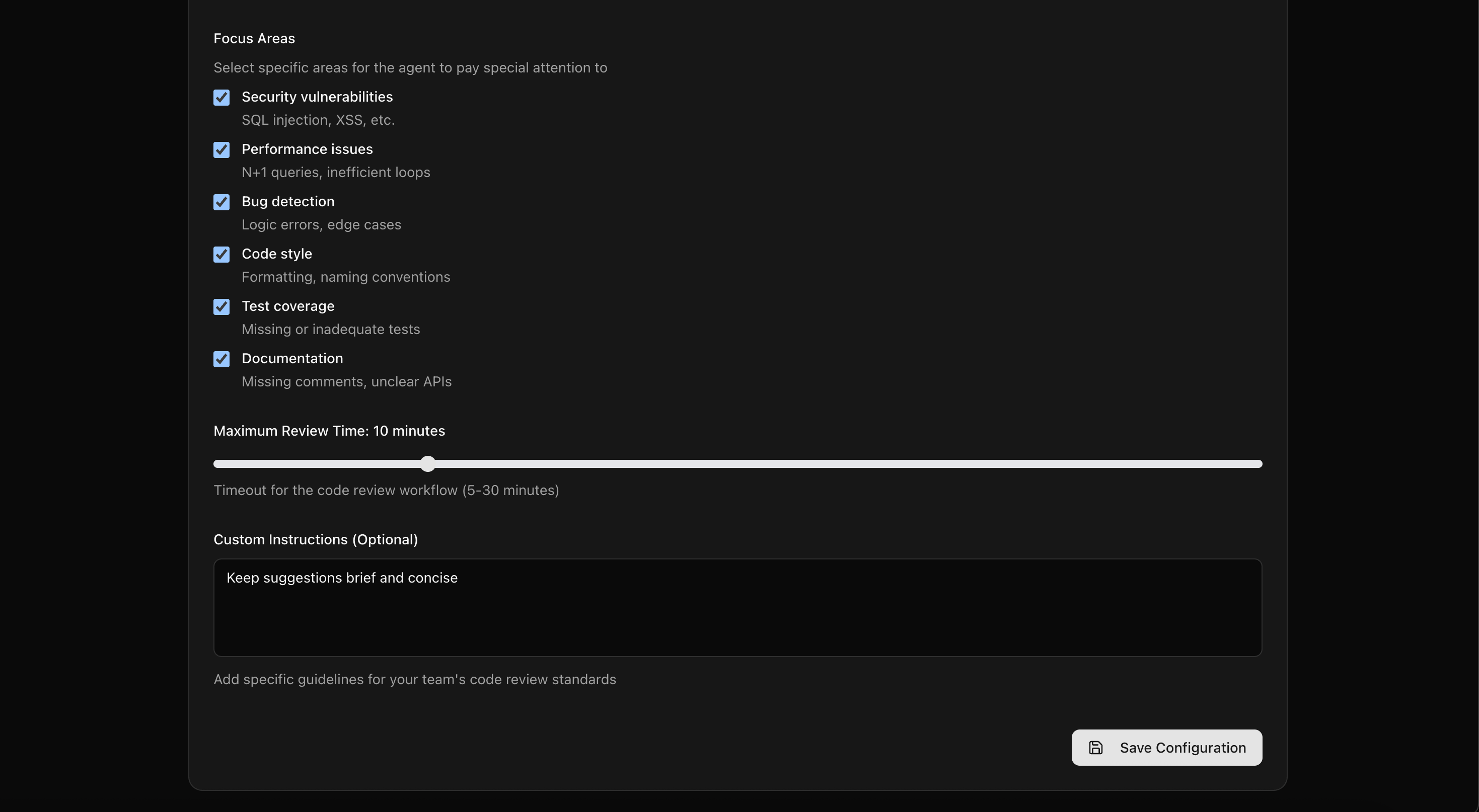
Kilo gives you control over how reviews work:
Review Styles
Strict: Flags everything. For security-critical code and production services.
Balanced: The default. Catches what matters without drowning you in noise.
Lenient: Light touch for prototypes, WIP branches, and exploratory work.
Focus Areas
Pick what the reviewer prioritizes: security vulnerabilities, performance issues, bug detection, code style, test coverage, or documentation gaps.
Custom Instructions
Add your own rules. Your team’s conventions, domain-specific patterns, edge cases. The reviewer applies them automatically.
Graphite offers custom rules but no preset review style - you configure everything yourself.
The Cursor Acquisition
Graphite was acquired by Cursor in December 2025. If you’re already using Cursor, that might mean tighter integration down the road. It also means Graphite’s roadmap is now tied to Cursor’s priorities, not yours.
The Bottom Line
Graphite is a single-purpose review tool with locked model selection, seat-based pricing, and a workflow that adds complexity for teams that may not need it.
Kilo gives you model flexibility, transparent per-token pricing, and reviews integrated into the same platform where you write and ship code.
Choose Graphite if:
You’re already using Cursor and want tight integration
You prefer a focused tool that specializes in review workflows
Choose Kilo if:
You want to choose which AI model reviews your code
You want model flexibility and transparent per-token pricing
You prefer reviews integrated into the same platform where you write and ship code
You value an open-source, open-model approach over vendor lock-in
You’re looking for an all-in-one agentic engineering platform, not just a review tool
Code Reviews is available now in the Kilo Dashboard at app.kilo.ai/code-reviews. Connect your GitHub account, pick your model, and start catching issues before they hit production.
Kilo is the #1 app on OpenRouter with 1M+ active users and 25.1T+ tokens processed.