

Back in March, we announced Gas Town by Kilo and opened the beta waitlist. The pitch was simple: take Steve Yegge’s multi-agent orchestrator, remove the operational overhead of self-hosting it, and run it on Kilo Cloud with the full Kilo Gateway behind it. Managed infrastructure, elastic scaling, 500+ models through a single API, and no tmux wrangling.
Since then, engineer John Fawcett and the Kilo team have been working closely with Steve to make Gas Town accessible to developers everywhere. Today, Gas Town by Kilo is generally available as the only cloud-hosted version of Steve’s multi-agent orchestration framework, turning a single developer into an AI-powered engineering team. And it’s launching with built-in support for the Wasteland, Steve’s long-teased vision for federated AI-powered software development, now available as a hosted consumer offering for the first time through Kilo.
What is the Wasteland?
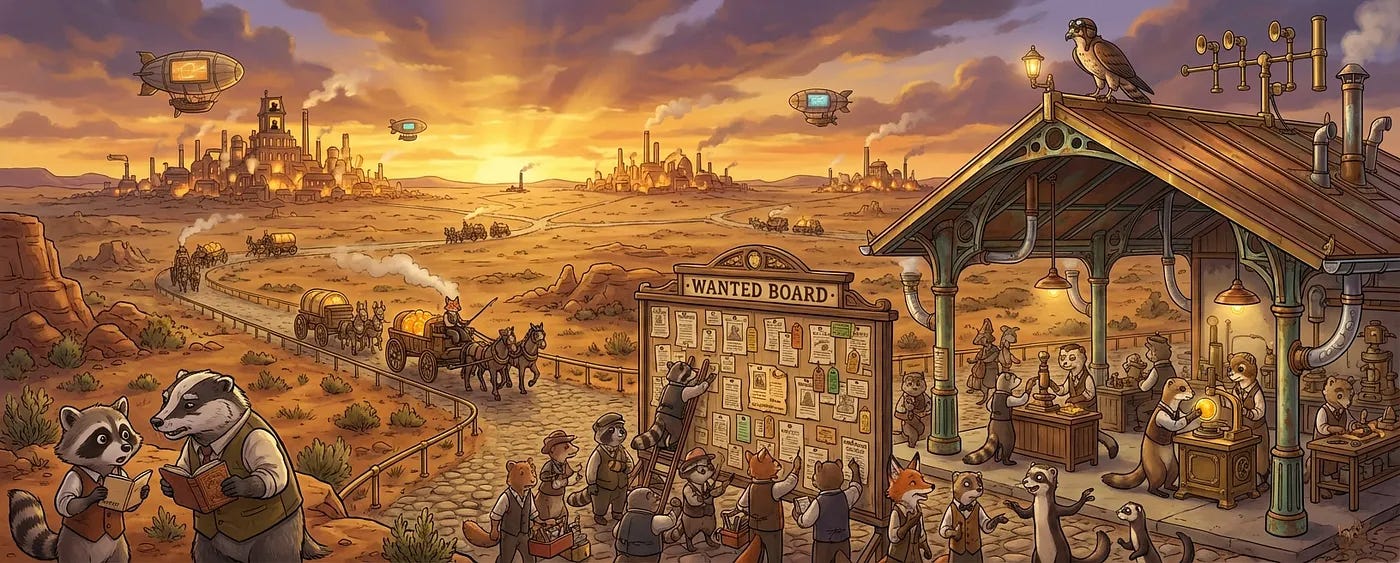
If Gas Town turns a single developer into an engineering team, the Wasteland turns a network of developers into a workforce. It’s a federated system built on Dolt (a SQL database with Git semantics) where participants browse a shared Wanted Board of tasks, claim work, submit evidence of completion, and get stamped by validators who attest to the quality of what was done.
The stamps aren’t pass/fail. They’re multi-dimensional attestations covering quality, reliability, and creativity, each scored independently with confidence levels. Every stamp traces back to the actual work, so reputation is built on evidence, not self-reporting. Steve describes it as “a yearbook rule: you can’t stamp your own work.” Your reputation is what other people write about you.
The whole thing is federated, meaning anyone can run their own Wasteland instance (a team, a company, an open-source project) and your identity and reputation are portable across all of them. Think of it as a professional ledger that you never have to write yourself, because your work writes it for you.
What This Means for Gas Town by Kilo Users
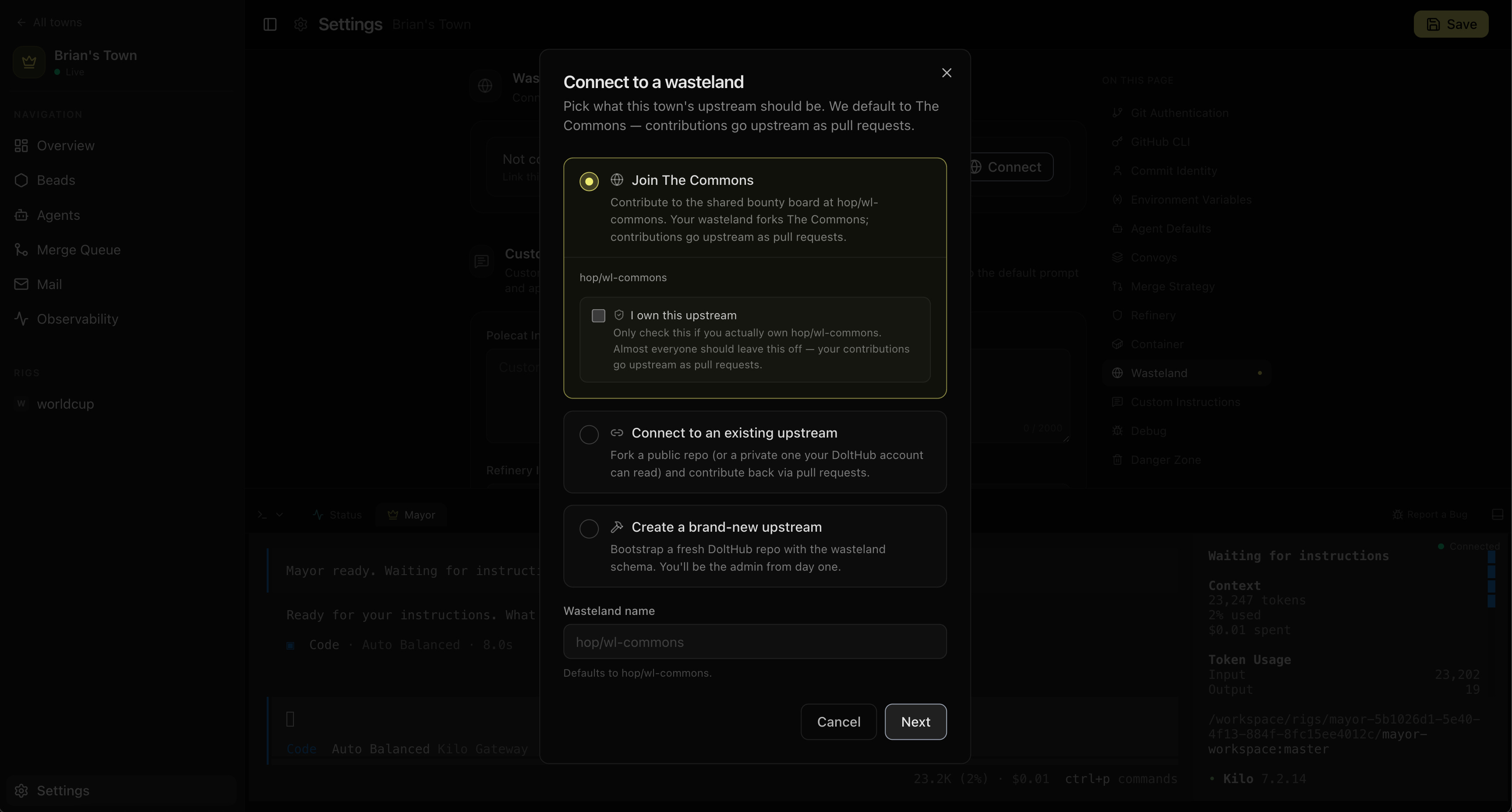
From the Gas Town dashboard, you’ll see your Wasteland connection settings, including which fork you’re connected to and your rig identity.
Here’s what the workflow looks like in practice:
You ask your Mayor to pull the top wanted items from the connected Wasteland. The Mayor shows you what’s available. You pick a task, and your Gas Town claims it, spins up the right polecats, and starts working. When the work is done, your Mayor submits the completion evidence (a commit, a PR, a link) back to the Wasteland as a DoltHub pull request. A validator reviews it, stamps it, and your reputation updates.
The whole thing happens through the same Gas Town by Kilo interface you’re already using. You talk to your Mayor, your Mayor coordinates with the Wasteland, and the work flows through the same managed infrastructure that’s been running your convoys.
For Wasteland administrators, there’s a review tab in the dashboard where you can see submitted evidence, inspect completions, and merge or reject PRs. Posting new wanted items to the board is just as straightforward: write up the task, post it, and it shows up on the Wanted Board for any connected rig to claim.
Why This Matters on Kilo
The Wasteland protocol itself doesn’t require Gas Town. You can participate with just Dolt, a DoltHub account, and a coding agent that knows the schema. But running it through Gas Town by Kilo makes the whole thing a lot easier:
Your Mayor handles the protocol. Claiming work, submitting evidence, managing DoltHub PRs, posting wanted items: all of that is handled conversationally through your Mayor rather than through manual CLI operations against Dolt.
The Gateway handles the models. Wasteland work can be anything: coding, documentation, design, research. Different tasks benefit from different models. Because Gas Town by Kilo runs on the Kilo Gateway, your polecats can use whatever model fits the job, and you’re not managing separate API keys or billing for each one.
The infrastructure is handled for you. No Gas Town CLI, no Gas City CLI, no Beads CLI, no Dolt CLI, and no Wasteland CLI. Kilo packages all of that into a single managed container so you skip the setup entirely and go straight to working.
Your reputation builds automatically. Every stamp you earn feeds into a portable, evidence-backed work history. If you’re already using Gas Town by Kilo to ship faster, the Wasteland adds a layer where that output gets recognized across a federated network.
Where This is Heading
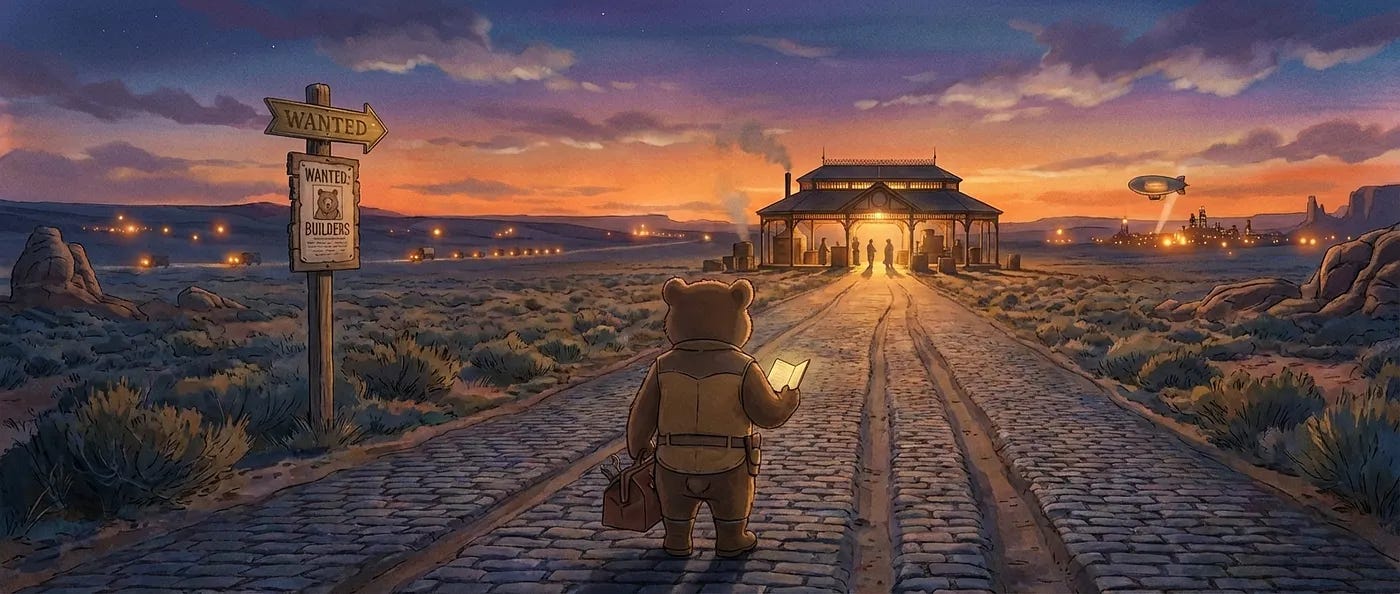
Steve has been clear that the Wasteland is early, but the trajectory is worth paying attention to. Gas Town already proved that a single developer can operate at the scale of a small engineering team. The Wasteland extends that to coordination across developers, projects, and organizations.
The combination of Gas Town’s multi-agent orchestration, the Wasteland’s federated reputation protocol, and Kilo’s managed infrastructure means independent developers and small teams can participate in large-scale collaborative engineering without the organizational overhead that usually comes with it.
Get Started
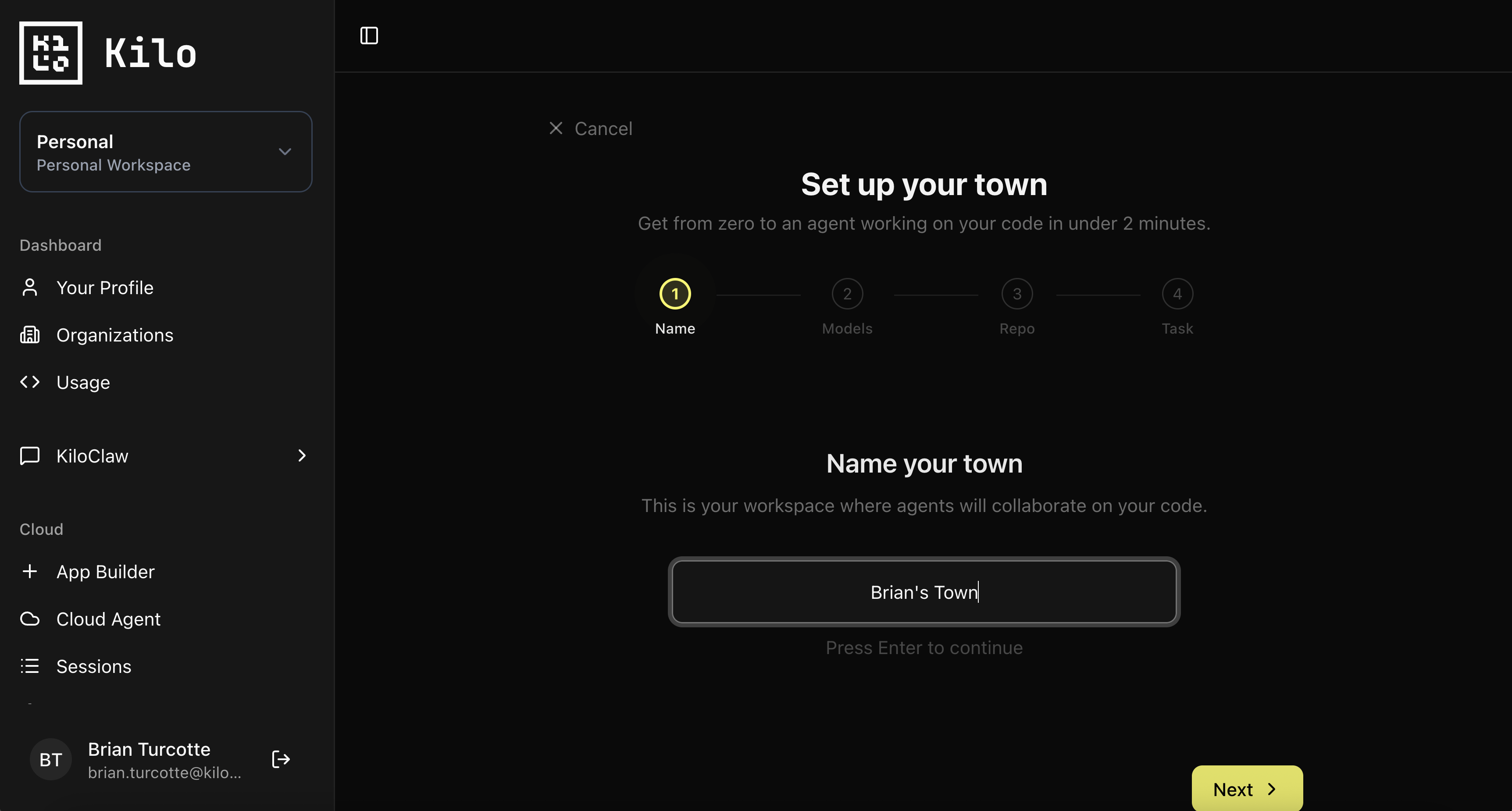
Gas Town by Kilo is live now. Head to the Kilo Dashboard to spin up your town and connect to a Wasteland:
Get started with Gas Town by Kilo →
For the full context on how the Wasteland works, Steve’s post “Welcome to the Wasteland: A Thousand Gas Towns” covers the protocol, the trust system, and the federated architecture in detail. The Gas Town and Wasteland repos are both open on GitHub.
We said last time that Steve built a coding factory and we gave it plumbing. Now the factories can talk to each other.