

Earlier this year, Steve Yegge published a 25-page blog post about something he built called Gas Town. If you read it, you probably had one of two reactions: either “this is insane” or “I need to try this immediately.” Both are correct.
Gas Town is an agent orchestrator. Not in the hand-wavy “we orchestrate AI” sense that’s been floating around pitch decks for the past year. It’s a real, working system that coordinates 20 to 30 AI coding agents simultaneously, with defined roles, workflow management, merge queues, patrol loops, and a level of operational complexity that Steve himself compares to Kubernetes. He also compares it to a late 1800s factory that can disembowel you. He’s an honest man.
The thing is, Gas Town actually works. People are using it to churn through massive backlogs of implementation work, running parallel agent swarms that file issues, write code, review each other’s output, merge changes, and land features while the developer focuses on design and direction. It’s the kind of setup that makes you rethink what a single developer (or a small team) can actually ship in a week.
Today we’re announcing Gas Town by Kilo, a fully managed version of Gas Town running on Kilo’s Cloud infrastructure and powered by the Kilo Gateway. We’re opening the beta waitlist now:
The Operational Reality of Running Gas Town Yourself
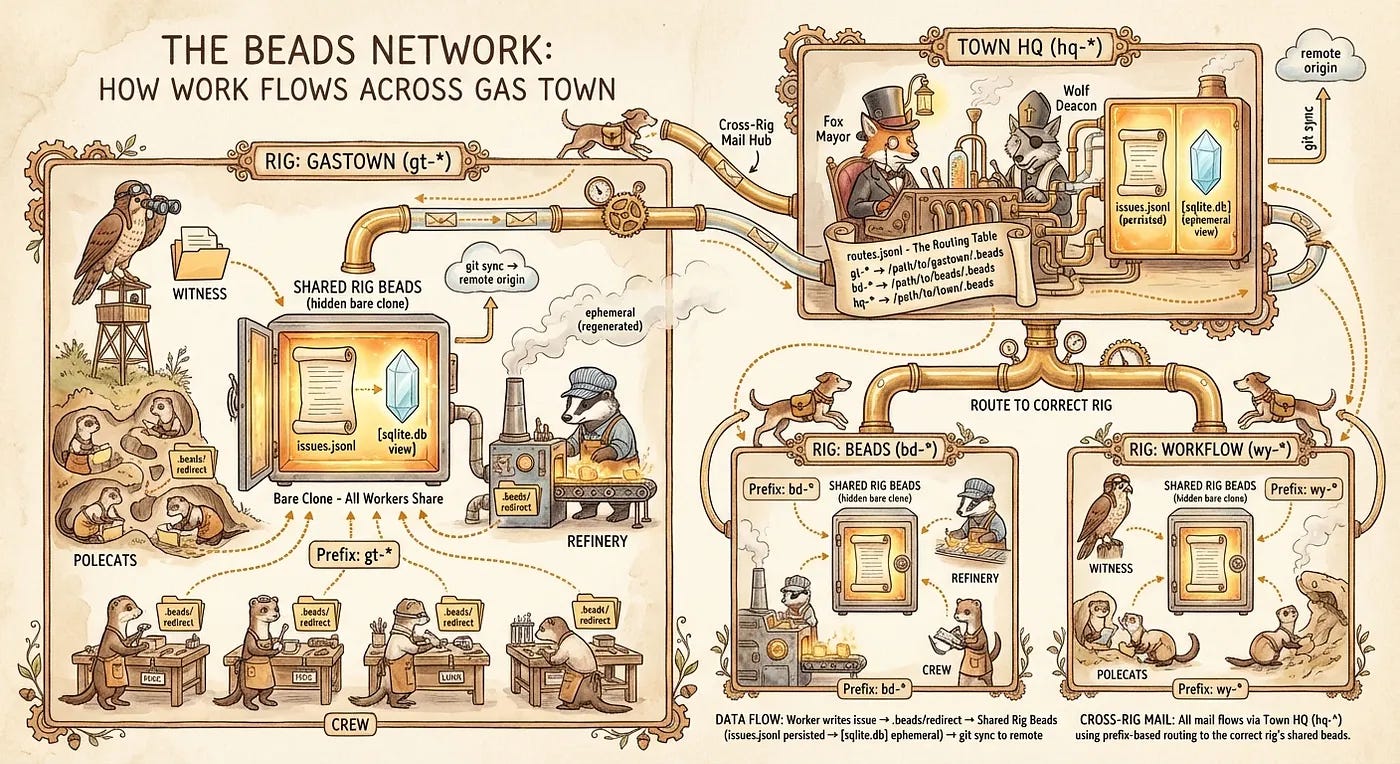
Steve is remarkably upfront about the fact that Gas Town is not a casual tool. The blog post includes multiple sections telling you to leave. He describes the target user as someone already juggling five or more CLI agent sessions daily, someone who doesn’t flinch at the idea of vibe coding at industrial scale, and someone who is comfortable with things occasionally going sideways.
But even for that person, the ops challenge of self-hosting Gas Town is real. You’re managing tmux sessions across multiple agents, provisioning and maintaining your own compute, coordinating API keys and billing across different model providers (Steve mentions needing multiple Claude accounts just to keep up with the token consumption, something you don’t need in Kilo), and handling your own monitoring and recovery when things break. Which they will, because that’s the nature of running a system this ambitious on infrastructure you’re stitching together yourself.
None of that is a criticism of Gas Town. It’s just the reality of running a distributed agent system on your own metal. Steve built something genuinely new, and the operational overhead is the tax you pay for being on the frontier.
Gas Town by Kilo removes that tax.
What Changes with Kilo
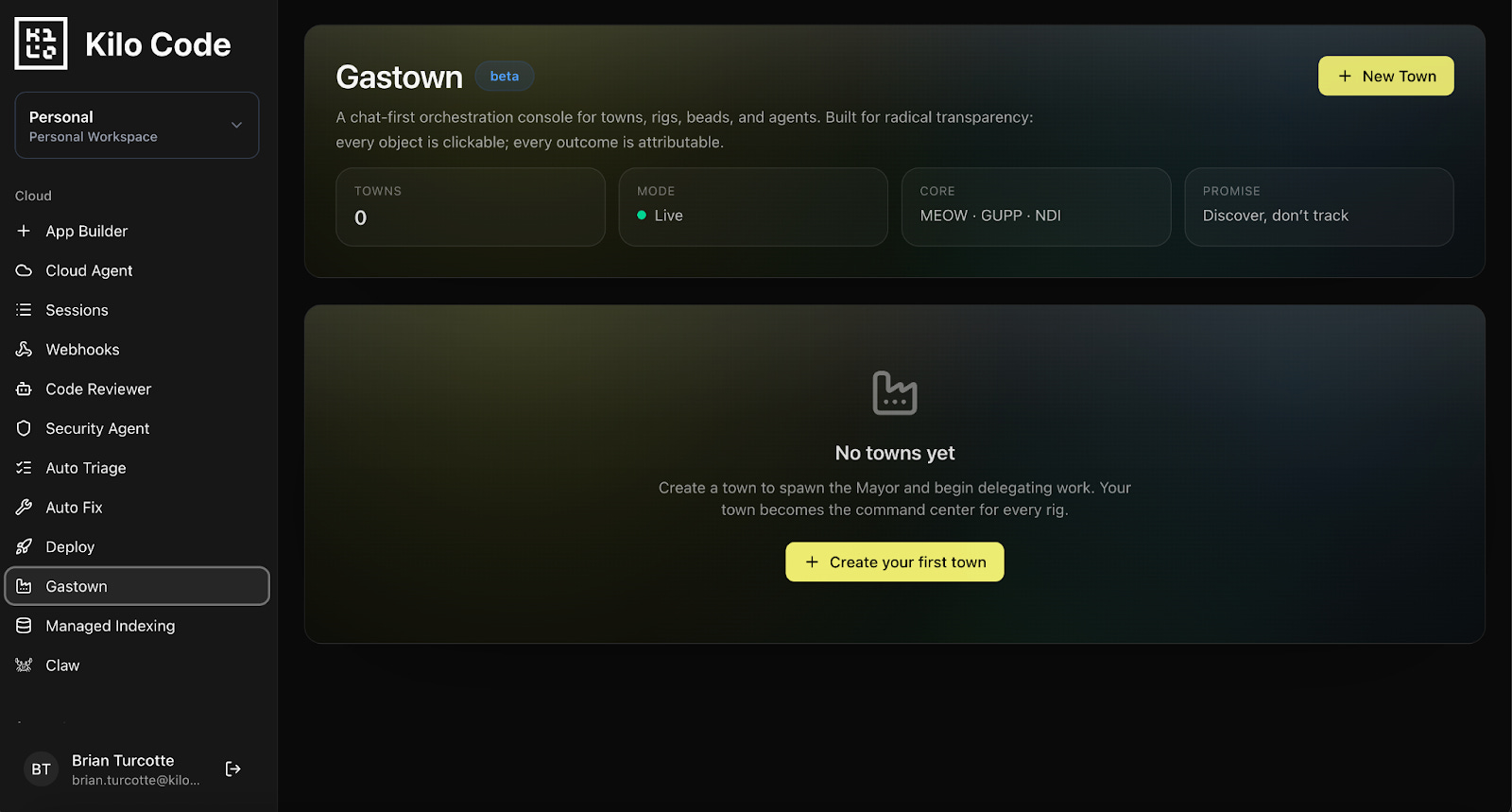
When you spin up Gas Town on Kilo Cloud, the full environment deploys in seconds. Your Mayor, Deacon, Witness, Refinery- all of it comes pre-configured and running on managed infrastructure. You don’t touch tmux, you don’t provision servers, you don’t wire up monitoring. It’s just there.
Polecats scale elastically. If a convoy needs 5 agents, you get 5. If it needs 50, you get 50. Kilo handles the compute allocation and you pay for what you use. Your convoys can run around the clock with built-in monitoring and auto-recovery, which means your work keeps moving when you step away. Updates ship automatically as Gas Town evolves, which it’s doing rapidly. Steve merged over 100 PRs from nearly 50 contributors in the first 12 days after launch. Keeping up with that pace manually is a job in itself.
The Gateway Makes the Difference
Here’s the thing that might matter more than anything else on a day-to-day basis: Gas Town by Kilo runs natively on the Kilo Gateway.
If you’ve used Kilo Code, you already know what that means. Over 500 models available through a single API. Opus, Sonnet, GPT, Gemini, open-source models, free models, everything. One set of credentials, one dashboard, one bill. Zero markup on tokens.
For Gas Town specifically, this solves one of the highest barriers-to-entry of the self-hosted experience. When you’re burning through tokens at the rate Gas Town demands, managing separate API keys and billing across providers isn’t just inconvenient, it actively gets in the way of the work. The Gateway makes that entire problem disappear. Your agents get routed to whatever model you want, billing consolidates automatically, and you never have to think about key rotation or rate limits pulling the rug out from under a running convoy.
This is the same infrastructure already serving over 1.4 million Kilo Code users. It’s not new, it’s not experimental. We just pointed Gas Town at it.
Who Should Sign Up

We’re not going to pretend Gas Town is for everyone, because it isn’t, and diluting the audience wouldn’t do anyone any favors. If you’re already running multiple AI coding agents in parallel and feeling the pain of managing them by hand, this is for you. If you’ve been watching Gas Town from a distance because the setup looked like it would eat your weekend and then some, this is your way in without the overhead.
We’re rolling out access in waves starting with early adopters who are already deep in multi-agent workflows.
Join the Gas Town by Kilo waitlist →
If you want the full picture of how Gas Town works, Steve’s original blog post is worth every one of its 25 pages. And the repo is open on GitHub if you want to dig into the code.
Steve built a coding factory staffed by superintelligent robot chimps. We gave it plumbing.
More to come as the beta rolls out!
Looking forward to this! More than managing gastown, I find wrapping my head around gastown concepts and managing agents in gastown harder. Curious how you're planning to make it more accessible.
Is there any plans to contribute back to Gastown or share the KiloCode configuration? KiloCode was my go to for agentic coding but its lack of native support in Gastown has made me utilize it less and switch back to Claude Code