

Every team has its own conventions, style preferences, and architectural standards, and those usually differ from one project to the next. A review agent that applies the same generic rubric to every repo is going to miss the things you actually care about, so we taught it to adjust its review style based on the repo it’s working in.
Try it here: app.kilo.ai/code-reviews
REVIEWS.md: repository-specific review standards
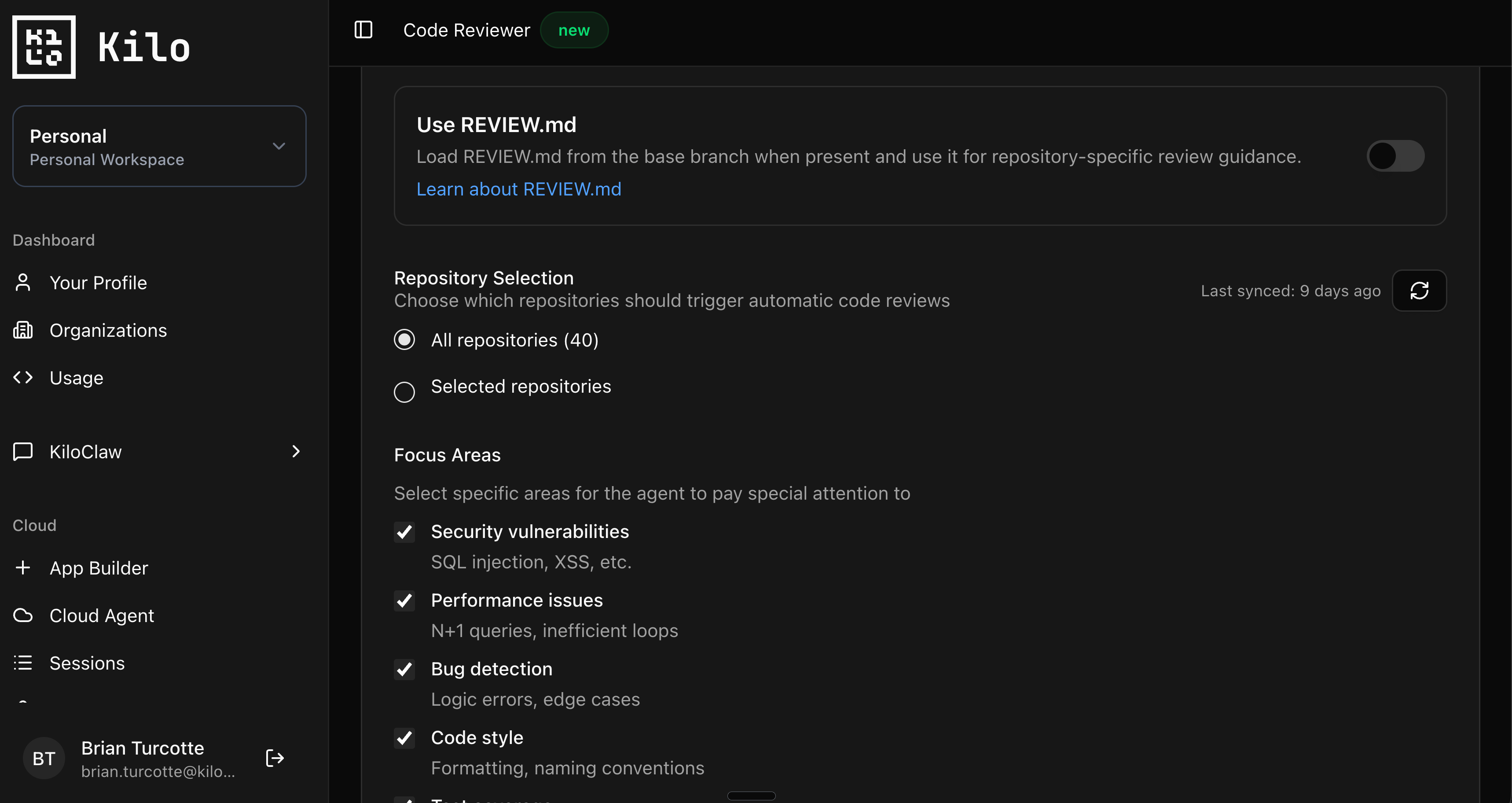
If you’ve used an AGENT.md file before, REVIEWS.md will feel familiar. It’s an open-standard Markdown file that works like a README for machines, except it’s catered specifically to review agents. You write down your conventions, style preferences, and architecture decisions in plain Markdown, and drop the file in the root of your project repo.
When you set up Kilo Code Reviews for automatic, AI-powered reviews on your GitHub or GitLab repos, you’ll now see a toggle to enable REVIEWS.md support. With it on, the Code Review agent reads your file and applies your repository-specific standards during every automated review. Your frontend repo can enforce different rules than your infrastructure repo, and neither needs to share a config with the other.
If you’re not sure what to include, we provide an example REVIEWS.md file with content tips right in the Code Reviews settings.
Code Review Memory: your agent learns from your feedback
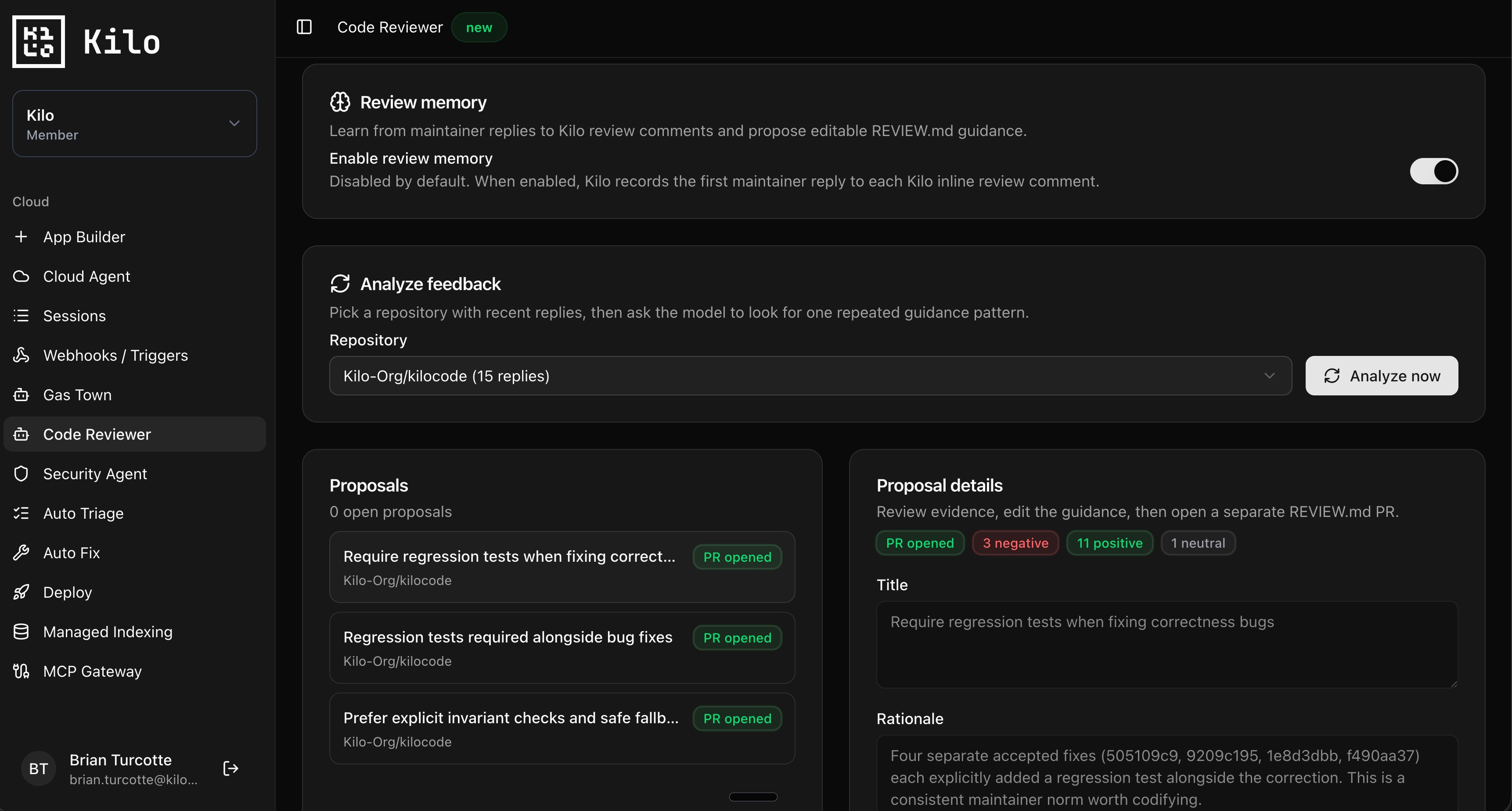
Writing a REVIEWS.md from scratch is useful, but you shouldn’t have to sit down and document every preference you hold. Most of them already exist in how you respond to reviews and PRs.
That’s the idea behind Code Review Memory. When you toggle it on, you can run an analysis that captures replies and feedback on Kilo Code Reviews in GitHub or GitLab. Kilo then uses AI to generate a proposal for updating your REVIEWS.md file based on what it learned from that feedback. If your team keeps dismissing nitpicks about line length but consistently acts on comments about error handling, your agent will pick up on that and propose adjusting its focus accordingly.
When the analysis finishes, you get a detailed proposal of the suggested changes, and Kilo can even generate the PR for you. You review and merge it like any other change to your repo, which means your review standards stay version-controlled and visible to the whole team. You don’t have to think about how you want your agent to act. It picks up your tendencies from how you actually behave.
Local review suggestions in VS Code
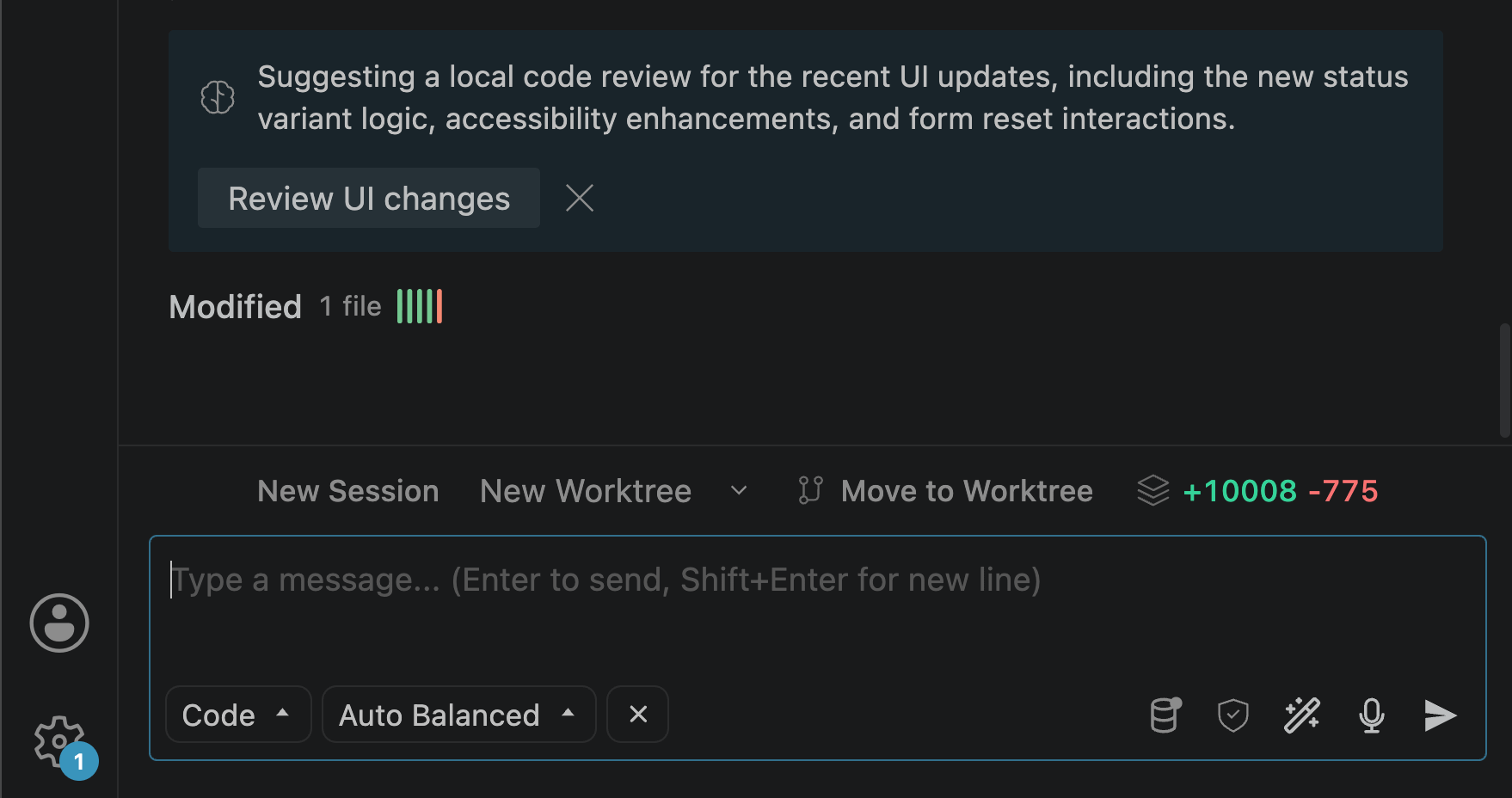
There’s one more update you might not have noticed yet. Locally in VS Code, Code mode will now suggest a local review when it makes sense, automatically but non-invasively. Accepting the suggestion switches you into Code Reviewer mode and analyzes any uncommitted changes for potential issues.
Catching problems before you push saves a round trip through CI and spares both your human reviewers and your cloud reviewers from flagging things you could have fixed in thirty seconds. It’s a small change, but it shortens the feedback loop in a way you’ll feel every day.
Try it now
All three features are live now. Head to app.kilo.ai/code-reviews to set up REVIEWS.md and Code Review Memory on your repos, and update your Kilo extension to get local review suggestions in VS Code.
I will say it again and again BitBucket