

TL;DR
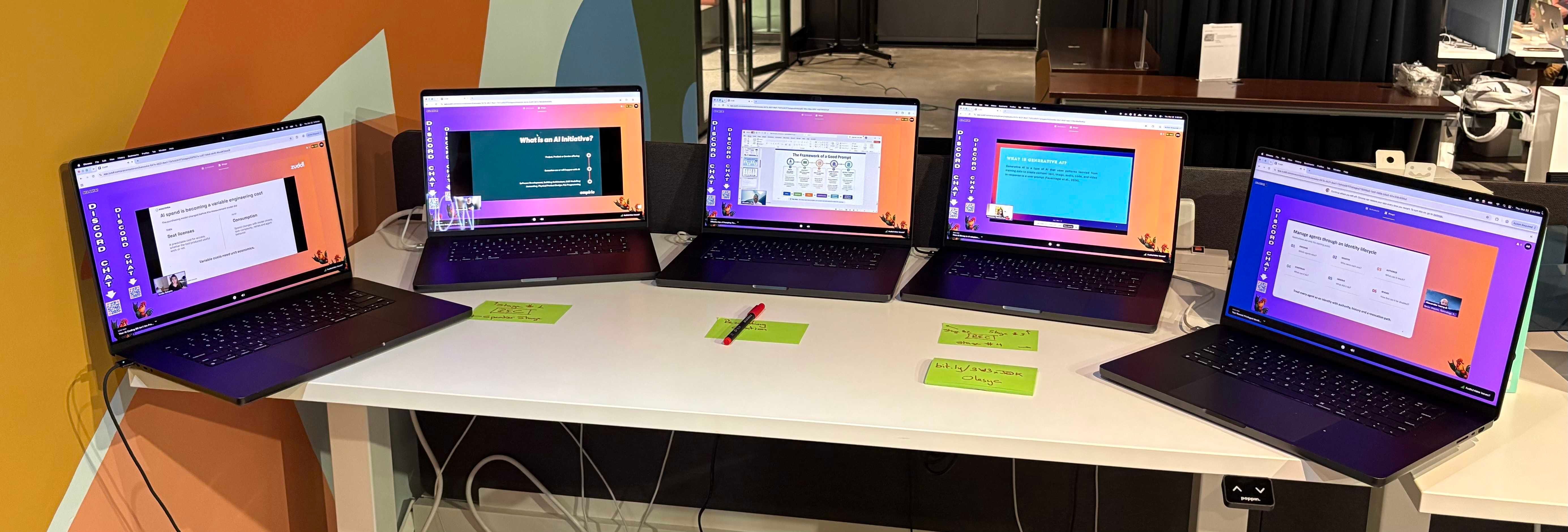
All Day AI was a free, online, 16-hour marathon event with zero vendor pitches. We pulled it together in about two months, saw 12,313 participants and 140 speakers, and people stayed and watched for an average of more than 6 hours.
An event of this scale doesn’t come together that fast without some serious sprinting, trial and error, and audible-calling. Plenty of people have asked how we did it, so this article open-sources the whole playbook: the goals, the team, the tools, the timeline, and the parts we’d change.
The Why
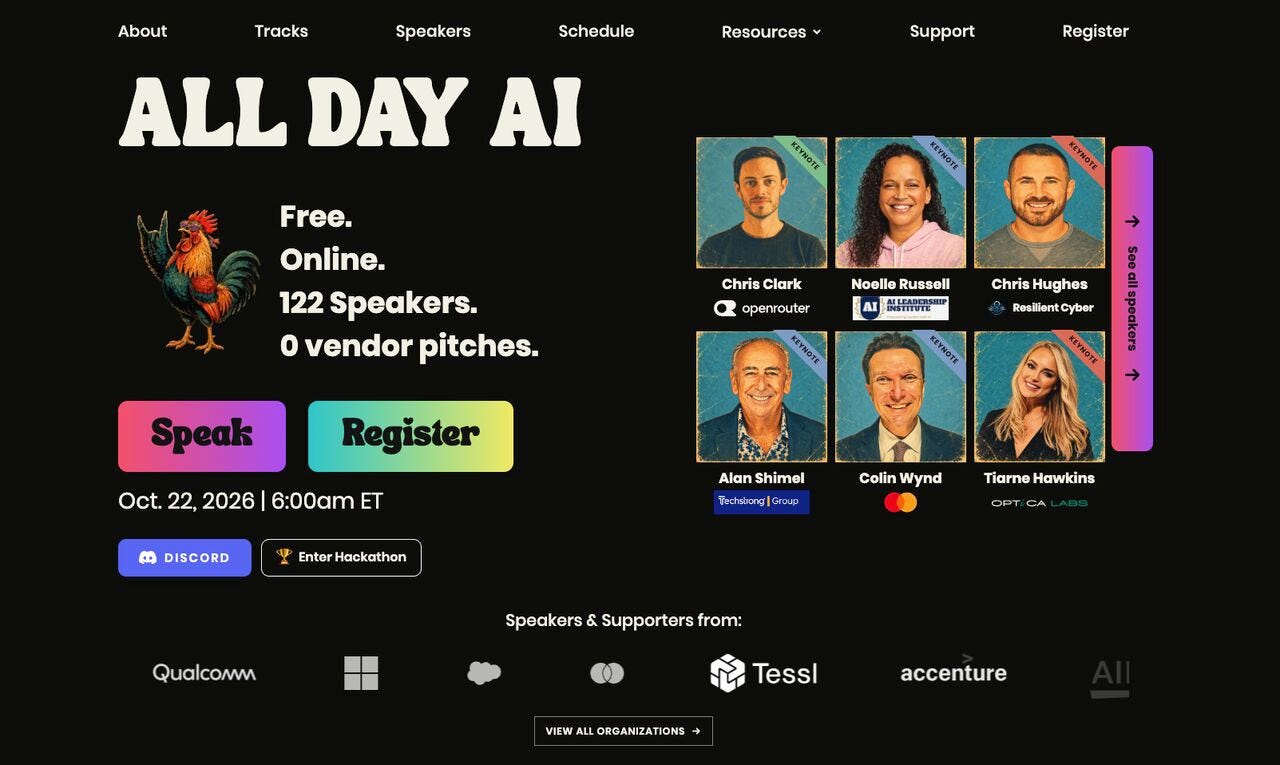
We built All Day AI for people who were under pressure to put AI to work but struggling to find advice they could trust. The tools and recommendations were changing week to week, and a lot of the conversation still led back to something for sale. We wanted a place where practitioners could explain what they had actually shipped, what had failed, and what another team could reuse.
That need shaped the format. Keeping the event free and online meant people could join from wherever they worked, without a ticket budget, a flight, or a travel approval. Banning vendor pitches kept the focus on useful lessons rather than a sales conversation. Across Build, Lead, Secure, and Ship, the goal was to give people clearer answers and peers they could keep learning with after the day ended.
The Hard Part
The first version of our website went up in August, and the event was slated to go live on October 22. That gave us roughly two months to hit our admittedly aggressive goals:
More than 10,000 registrants
4 tracks: Build, Lead, Secure, and Ship
A surviving Discord community
What made those numbers hard was that we were starting from zero. There was no existing All Day AI community, no speakers signed up, no website, no event platform, and no social presence. Every registrant and every speaker had to come from something we built or someone we reached in those two months.
If you’ve run an online event with multiple speakers, you know that even one track can be a logistical nightmare. We knew 120+ speakers across 4 tracks could get ugly, fast, so most of what follows is about how we kept it from getting ugly: a committed team, a few deliberate bets, and a lot of help from AI agents.
The People
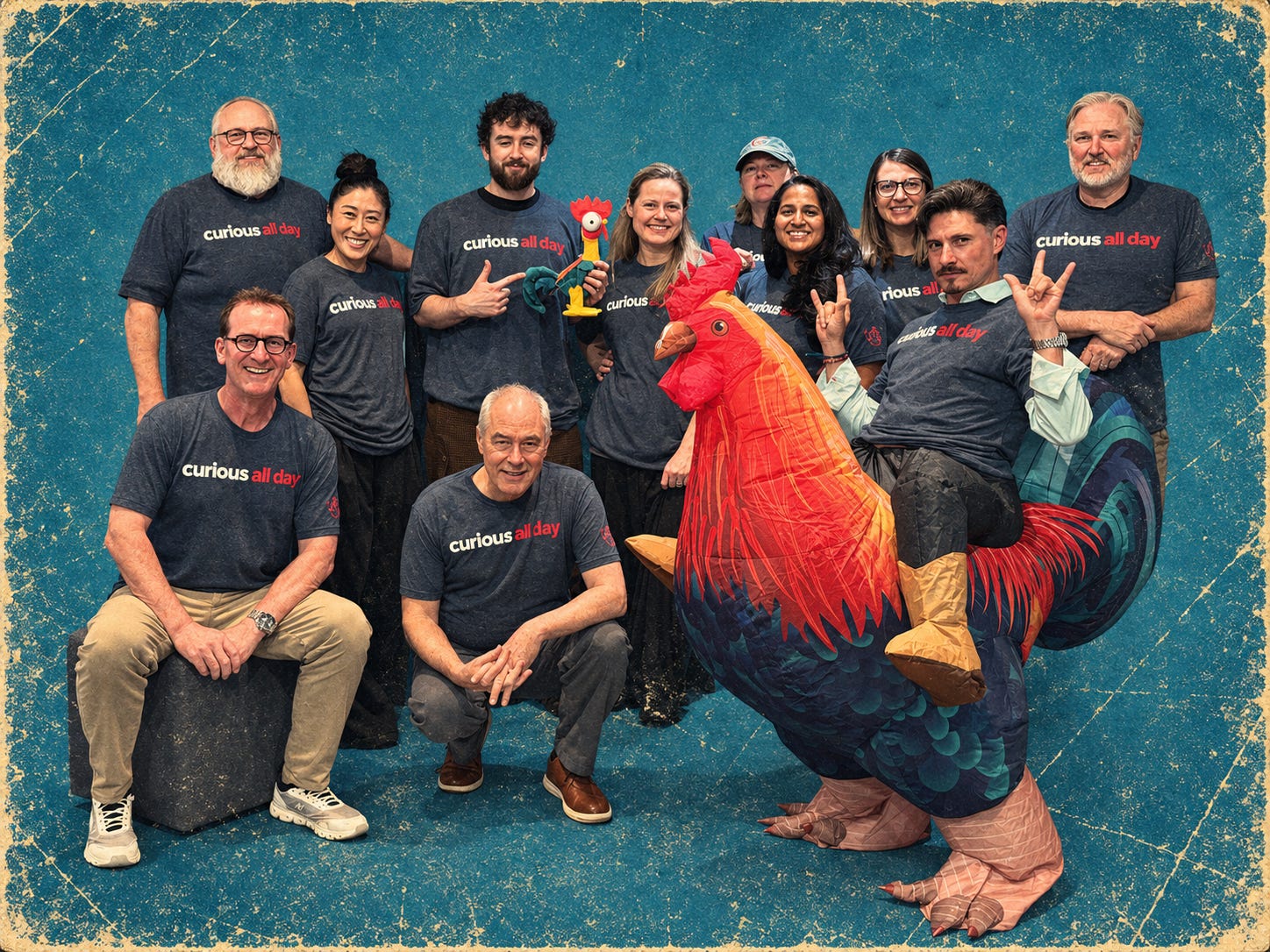
The most important part of the ADAI stack was the people. The core organizing team had more than 20 people across event co-founders, moderators, hackathon judges, ushers, and marketers, and they worked quickly and unselfishly through the build-up and especially on the day of. The team brought experience from organizations including Anaconda, Matejczyk Group, Carnegie Mellon University’s Software Engineering Institute, Techstrong Group, ACI Worldwide, and Community Hackathons, produced by Crowdbyte Solutions.
This was a community event, so all of it fell outside everyone’s day job. Nobody was paid to make All Day AI happen, and the fact that it happened anyway is a credit to how much the team believed in the project. They deserve not only credit but admiration.
Three Bets That Paid Off
Before we picked a single tool, we made a few decisions about what kind of event this would be. Those decisions shaped everything else, and in hindsight they did more for our numbers than any piece of software.
No vendor pitches, ever. Most conferences exist with at least a subtle motivation of money changing hands. People can sense that, and when they just want to learn, it’s a turnoff. So we banned pitches from the jump. That gave us a simple promise to make to attendees and speakers alike: you’re here to learn and to teach, not to be sold to.
Look like nothing else. Our goal for the website was to get visitors to understand right away that this wasn’t a normal tech conference. Our hallmark “Rockin’ Rooster” came out of a ~3 day back-and-forth with the team, where other ideas like “Rockin’ Grandma” were rejected in its favor. We felt the rooster represented something new, loud, and disruptive, in a good way. I used a free online SVG converter to turn the original crude cartoon into a scalable logo.
We carried the same idea into the speaker pages. Every headshot got a uniform background and photo effect inspired by vintage concert posters. I worked out the look in ChatGPT, then built a small app in Kilo Code that applied it programmatically through the OpenAI image API, so every new speaker matched the rest without manual editing. It wasn’t long before people recognized the rooster before they even knew what the event was about, which is proof the branding landed.Trust the community to spread the word. This was our biggest growth lever. On a random weekday in September, I had the idea to ask my Dot (an AI agent I’ll explain below) to reach out to 3,000 tech groups, hackathons, and events around the world: anyone who might have a shred of interest in All Day AI. I proposed a free deal. Tell your community about our event, and I’ll put your logo, link, and CTA on our website.
Hundreds responded. Based on rough estimates of community sizes, I would safely attribute 20-30% of our registrations to that one message. It worked because the offer cost nobody anything, and because a free, pitch-free event is something community organizers are happy to share.
The Stack
With those bets in place, the job became execution, and the tools we chose were all about saving the team’s time for the work only people could do.
Platform
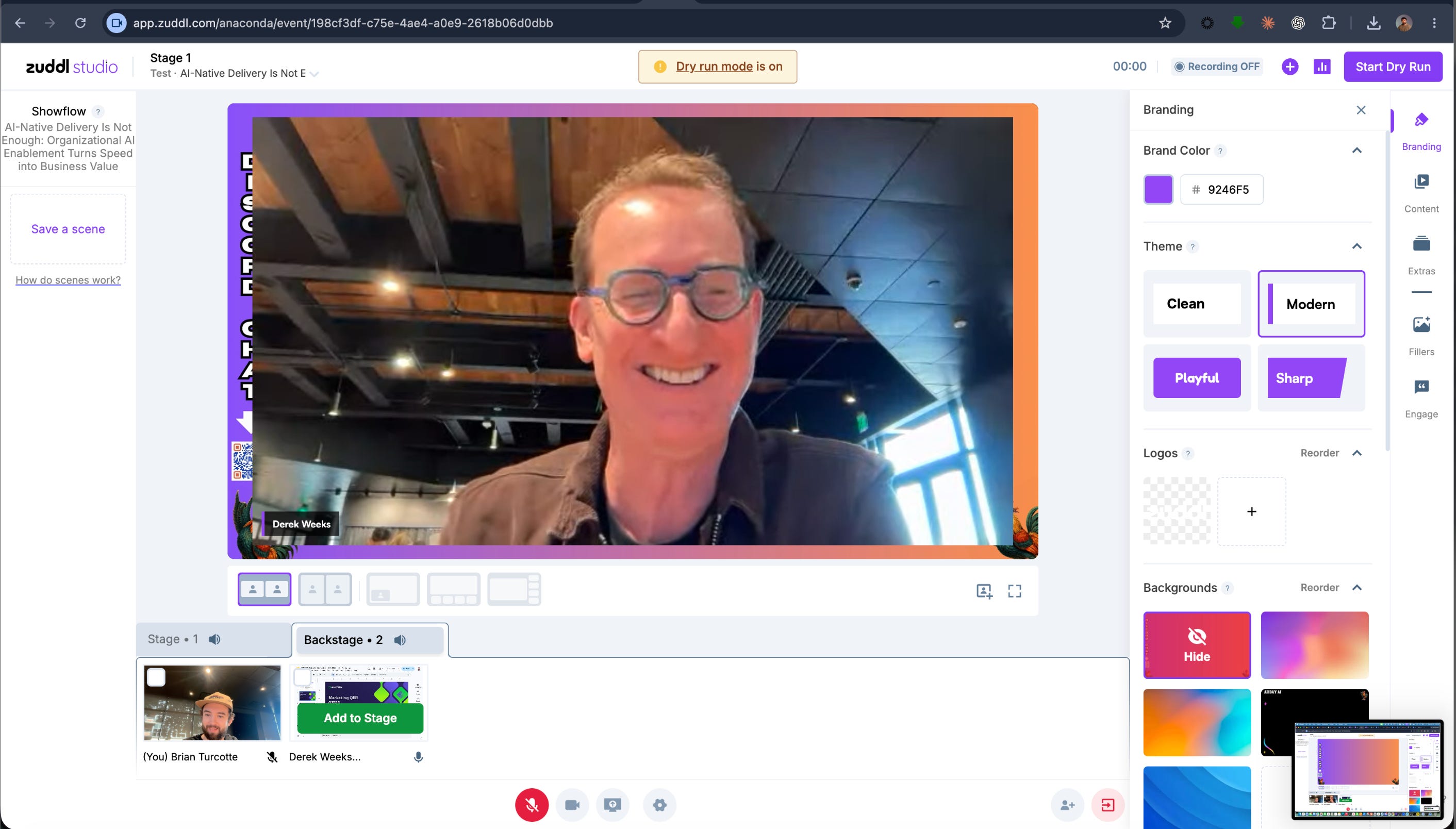
We wanted to spend as little time and money as possible on event infrastructure, so we looked for a platform that could natively handle 5 stages, registration forms, communications, and recording. We landed on Zuddl, which was modular enough to meet our requirements without us stitching together separate tools.
Website
Version 1 was built in Kilo Code for VS Code using GPT 5.6 and cost about $5. It was stored in GitHub, deployed to Vercel, and used Cloudflare for domain management. Because the speaker lineup and partner list changed constantly, the site had to change constantly too. The team and I made PRs as the event evolved, and I approved and merged them.
Operations
Here’s where we had to get crafty. We wanted to attract top speakers across the AI industry, and quality speakers want a clear point of contact with a name and a quick response time. A shared, generic email address wasn’t going to cut it, so we used mine.
That solved the trust problem and created a volume problem: one person fielding 140 speakers’ worth of email. To manage it, I used a series of AI agents with a human-in-the-loop editorial process.
OpenAI Dots. My Dot was the operating system for speaker communication. I gave it provisional access to Google Drive assets like the schedule and moderation Sheets and image collections, plus browser access to certain Zuddl lists and event settings. Then I had it send blasts and personalized speaker links, update Zuddl profiles, and manage moderation schedules. I stayed in the loop for every outgoing message, which let me track 140 speakers without holding the status of 140 email threads in my head. AI gets better with context, so the more I used the Dot, the more it understood the ADAI mission and the better it got at helping me.
Kilo. I let my Dot use the Kilo CLI on my computer to make site changes, which kept it more focused than asking it to generate GitHub PRs itself. When speaker information changed or I approved a new cohort, I asked the Dot to have Kilo update the site, so the website stayed in sync with the speaker list without a separate round of manual edits.
Instinct. Even with the Dot, my inbox became an absolute mess once we had about 20 of our 140 speakers. I gave Instinct, the agent that lives in iMessage, read-only access to my inbox and asked it to ping me whenever an urgent work item came in outside of All Day AI, so nothing from my day job got lost in the conference noise.
How It Played Out
Plans are one thing. Here’s what the two months looked like in practice, including the moments where it nearly fell apart.
August 5–11: Concept and plumbing. A small group of the original core organizers outlined the event. A crude website appeared with placeholder registration, speaker, and volunteer forms while the team worked through platform, legal, and data requirements. We set the go-live date for October 22, 2026.
August 16–25: A slow start. Responsibilities were assigned, and I took on speaker operations. Speaker intake, terms, platform setup, and partner materials were still being assembled. On August 25, we had 100 registrations and 12 speaker submissions, not even 1% of the final counts. With less than two months to go, we had a lot of ground to make up.
August 28–September 11: Building in public. A readability-focused redesign prompted debate about losing the style of the first website. The first 22 speakers went up August 31, and a mobile registration issue was fixed September 3. Speakers didn’t just show up on their own; programming took active outreach and curation, with roughly 20 submissions awaiting review by September 11.
September 14–30: The community takes over distribution. This is when the partner outreach started paying off. Community partnerships expanded through groups including AWT and NumFOCUS, and by September 28, registrations reached 2,725.
October 12: The rehearsal humbles us. Registrations hit 5,864, but the dry run exposed how much we were still learning about Zuddl. Momentum and production readiness turned out to be separate problems, and we’d been solving the first one much faster than the second.
October 13–16: A close call. A website-hosting payment warning forced a card replacement, and the site almost went down at the 11th hour. Speaker communications needed follow-up. By October 16, we had almost 8,900 registrations and 140 sessions locked, but we were still behind plan on registrations.
October 18–19: Crossing the line. The count reached 9,961 late on October 18, just shy of our 10,000 goal. Speaker-access issues kept surfacing, so after working with platform support, we organized a last-minute series of dry runs.
October 20–21: The run sheets land late. A preliminary moderator schedule circulated October 20, still dependent on available staffing. Full moderation schedules were finalized and posted at 9:40 p.m. the night before. By the end, the work was no longer about promotion at all; it was detailed human coordination.
October 22: Event goes live. We finished with 12,313 registrants, 140 speakers, and an average watch time of more than 6 hours.
What We’d Do Differently
Looking back at that timeline, most of the stress came in the last ten days, and most of it traces back to things we deferred while we chased registrations.
Earlier, more frequent speaker ops. Because we were crunched for time, we prioritized carefully: once a speaker was on board, we considered them done and moved on to other operational work. We should have made time for multiple dry runs, kept up ongoing comms with speakers, and gotten earlier commitments to scheduled sessions. No-shows were low, but they weren’t zero, and we can plan for that next year.
Platform training for moderators and volunteers. We were lucky to have most of the moderation team in person in Austin, so we could squeeze in a day of last-minute Zuddl training. It takes a lot of behind-the-scenes work to get a speaker prepped and on stage, and it would have been less stressful to train moderators and ushers further in advance, ideally before the October 12 rehearsal rather than after it.
A dedicated speaker inbox. Reminder to myself for next year: don’t use my work email for speaker comms. The agents kept it manageable, but a separate, named inbox would have given speakers the same personal point of contact without burying my day job.
Post-Event
All Day AI went from 100 registrations to more than 12,000 in about two months, built by volunteers, a $5 website, and a handful of agents. If you want to see what came out of it, you can watch all the recordings here. And if you want to be part of the next one, sign up for next year here.